
Business Growth · UK Guide 2026
Write a Back-in-Stock Message With a Useful Next Step
JASOTO · Updated November 5, 2026 · 1,609 words
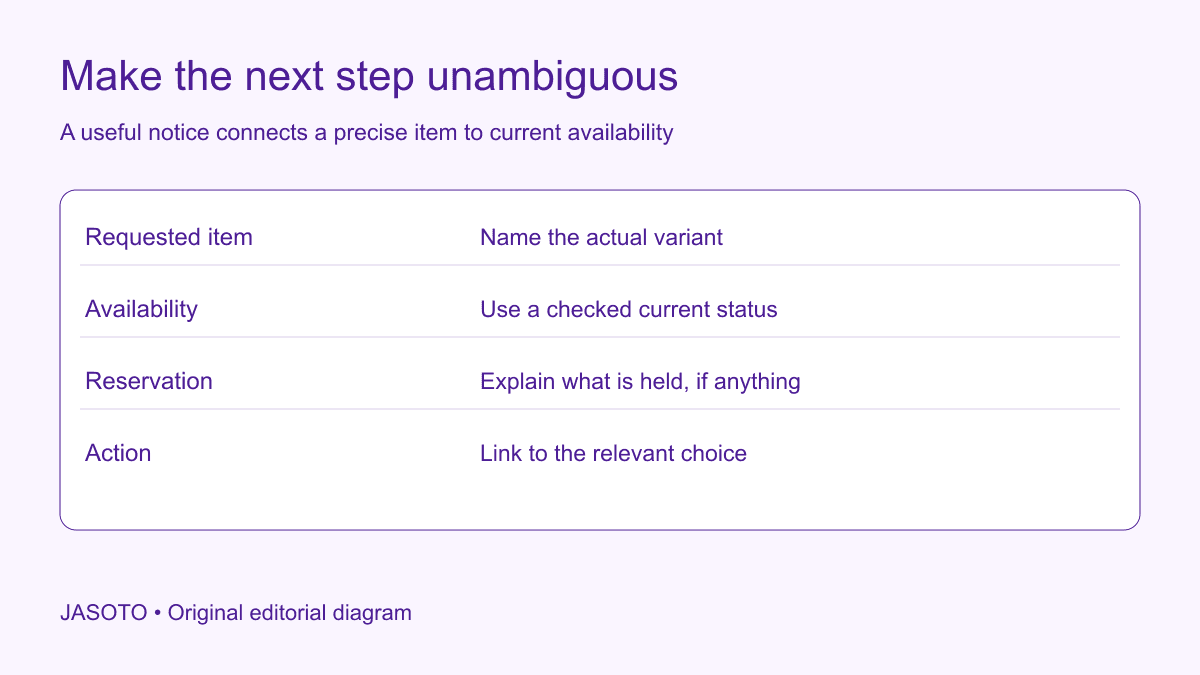
Original JASOTO editorial diagram. Its complete workflow is explained in the article; no actual customer outcome is depicted.
Prepare a back-in-stock message by confirming the exact requested item, stating its current availability and giving one useful next step. Make clear whether anything is reserved. The message should help the customer act on a specific interest, while the linked page remains accurate if availability changes before they open it.
This guide is an original writing and review method for small retailers in the United States. It uses invented message examples and does not send email or configure a marketing system. The business should use its appropriate recipient, privacy and commercial-email process. Check the actual requirements for the audience and message rather than treating a short stock update as automatically exempt from marketing rules.
The practical answer
- Confirm the exact variant is available before preparing the notice.
- Explain whether the message reserves anything.
- Link to the relevant product choice and test the destination.
- Handle recipient preferences and commercial email requirements appropriately.
Confirm the actual item before writing
Identify the product, variant and location or sales channel to which the notice relates. A general product family may be available while the size or color the customer requested remains unavailable. Check the relevant stock record through the business's normal process and note who confirmed it. Do not announce a restock based only on a supplier's shipment notification if the business cannot yet offer the item.
Distinguish received stock from available stock. Some units may be allocated to existing orders, awaiting appropriate checks or unavailable through the intended channel. Ask the responsible operations person which status supports the message. A notification should reflect what the customer can actually do next, rather than an internal milestone that sounds promising but does not yet permit a purchase.
Match the notice to the recorded interest
Use the product or variant information associated with the request. If the business collected only a family-level interest, avoid claiming that the recipient asked for a particular size. Keep the wording accurate to the evidence available. Personalization can be useful when it is correct, but a confident incorrect detail can make the notice harder to understand than a straightforward general description.
Check how recipient preferences and request status are managed. A person may have withdrawn their interest or already purchased through another route. Use the actual system and appropriate rules for that audience. Do not combine every old customer address into a restock audience simply because the business has access to it. The message's relevance and permitted use need a considered process.
Write a subject that names the useful fact
A subject such as the requested navy notebook is available again tells the recipient what changed. Adapt it to the actual product and avoid unnecessary urgency. Do not say reserved for you unless a reservation really exists. Do not imply that an item will never return when the business has no evidence for that claim. The subject should remain consistent with the body and destination.
The [FTC's CAN-SPAM guide](https://www.ftc.gov/business-guidance/resources/can-spam-act-compliance-guide-business) explains requirements for commercial email, including accurate subject lines and opt-out handling. This article does not classify a particular message or provide a complete compliance checklist. Have the responsible person apply the actual requirements and any other relevant rules before sending, including where a service provider prepares messages on the business's behalf.
State availability without manufacturing scarcity
Use a checked current statement, such as the named variant is available to order through the linked page. If the business chooses to mention a quantity, verify the basis and consider how quickly it changes. Avoid invented countdowns, unsupported last-chance language or claims that several other customers are buying. A useful stock notice does not need fictional demand to give the recipient a reason to inspect the item.
If availability is limited by location, shipping area or another relevant condition, explain it clearly enough for the recipient to understand the next step. Do not announce nationwide availability when the item is offered only for collection from one store. Keep the message concise, while preserving the condition that materially changes whether the customer can use the offer.
Explain the reservation position
Say whether the notice merely reports availability or relates to a genuine held item. If no item is held, use plain wording appropriate to the actual offer. Avoid implying that joining a notification list created an order or guaranteed priority. The customer should not discover at checkout that an apparently personal allocation was only a general announcement.
Where a reservation does exist, confirm the actual terms through the business's approved process and communicate the relevant next action accurately. Do not invent an expiry time or payment condition to make the template look complete. A reservation message may require different operational handling from a general restock notice, so keep its stock allocation and customer record connected.
Choose one primary action
Send the customer to the relevant product or selected variant wherever the storefront appropriately supports that experience. A general homepage forces them to repeat the search and may lead to the wrong version. Explain the action in the link label: view the navy version or check the current product availability is more informative than a generic instruction that gives no destination context.
Avoid crowding the message with unrelated promotions before the requested item. The customer asked about something specific. Additional material can obscure the action and may affect the message's legal or preference treatment, which the responsible team should consider. Keep the principal purpose and practical next step understandable even if the recipient reads only the first paragraph and the main link.
Use a template that preserves the important distinctions
An original general notice could read: You asked to hear about the [product and variant]. It is currently available through [relevant channel]. This message does not reserve an item. Please use [specific product link] to check the current details and place an order. Availability may change; the product page shows the current position. Replace every placeholder with verified information and apply the business's required sender and preference elements.
For an item available only at one location, the practical sentence might be: The [variant] is available to order for collection from [confirmed location]; please review the collection details on the product page before purchasing. Do not tell the customer to travel merely because a notification was sent. An actual collection order and readiness confirmation should follow the business's appropriate process.
Test the destination as part of the message review
Open the intended link through the authorised test process and check the selected product, image, price and availability. Confirm that the destination works in the relevant customer context. A link copied from an administrator's session may not behave the same way for a customer. Ask the responsible technical person to resolve the issue rather than assuming a successful preview proves the whole path.
Check the practical next action too. If the page shows the item but the intended collection option is unavailable, the notice may still be misleading or unhelpful. Use a representative test and preserve relevant findings. Do not claim every possible device or customer condition has been verified from one review. Focus on the intended flow and make meaningful limitations visible to the responsible person.
Plan for the item becoming unavailable again
Ask what the linked page and customer-service team will do when the available units are exhausted. The message may remain in inboxes long after the stock changes. A current destination can explain the accurate position and an appropriate next step. Avoid leaving a static landing page that continues to promise immediate purchase after the actual order process has closed.
Prepare a factual response to a customer who opens the notice later. Explain the current status and offer only verified options. Do not promise another restock date based on hope or substitute an unrelated item as though it were equivalent. A clear record of the original notice and stock timing can help the team respond accurately without blaming the customer for reading at a different time.
Worked example: a particular notebook color
Imagine a stationery retailer receiving new stock of a navy notebook while the green version remains unavailable. Its request records identify customers interested in navy. The team confirms availability, prepares a variant-specific notice and tests the destination. The message explains the actual purchase step without suggesting an individual item has been held. The green-interest audience is not told its requested version has returned.
Later, the navy product page updates when the available stock changes. This invented example claims no open rate, revenue or customer satisfaction outcome. It demonstrates how item identity, recipient relevance and a current destination work together. The quality of the notice depends on those operational facts as much as on whether its wording sounds attractive.
Review actual questions after the send
Keep the notice reference connected to the relevant variant and send date, so customer-service staff can identify which availability statement the customer received.
Record the kinds of customer questions the notice generates, such as whether an item was reserved or which collection location applies. Use those observations to revise the relevant sentence or process. Avoid claiming a message increased sales without suitable measurement and context. Keep the earlier wording and destination reference so an unhelpful revision can be compared and reversed.
Use JASOTO businesses to discover relevant customer-communications support and verify capability directly. If maintaining stock notices becomes ongoing work, explore ecommerce support roles within a staffing review. For a confirmed ready-to-collect order, research travel after checking the location. A useful restock notice gives an interested customer a clear, accurate next step without promising more than the business can actually provide.
Put the guide into practice
- Verify availability and the intended recipient group.
- Write a specific subject and accurate next step.
- Check the selected variant, destination and current terms.
- Plan the response if stock changes after sending.
Frequently asked questions
Does a restock notice reserve the item?
Only say that if the business actually has an agreed reservation arrangement for the recipient. Otherwise explain the current availability and purchase step accurately. A notification request and an order are different events, and the message should not blur them.
Should every customer receive every restock notice?
Use the business's appropriate recipient and preference process for the actual message. A request about one product does not automatically explain every other marketing use. Check applicable requirements and seek suitable advice rather than expanding the audience merely because more addresses are available.
What if the item sells out before the message is opened?
The destination should show the accurate current position and a useful next step. Avoid guaranteeing availability unless the business can support it. Plan how customers can check the correct variant or ask about an appropriate alternative without receiving a stale promise.
Explore JASOTO tools
Discuss relevant catalogue and customer-message needs with suitable providers.
Explore ecommerce support roles →Consider staffing when stock checks and customer updates become ongoing work.
Research a confirmed collection journey →Plan travel after the shop confirms an actual order is ready to collect.
Continue with JASOTO
Compare your next step
Discover UK businesses, compare services and request written quotes before making a decision.