Drainage & Wastewater · UK Guide 2026
Septic Tank Emptying, Sewage Servicing and Drainage with Ekoflow
By JASOTO · Updated 10 October 2026 · 13 min read
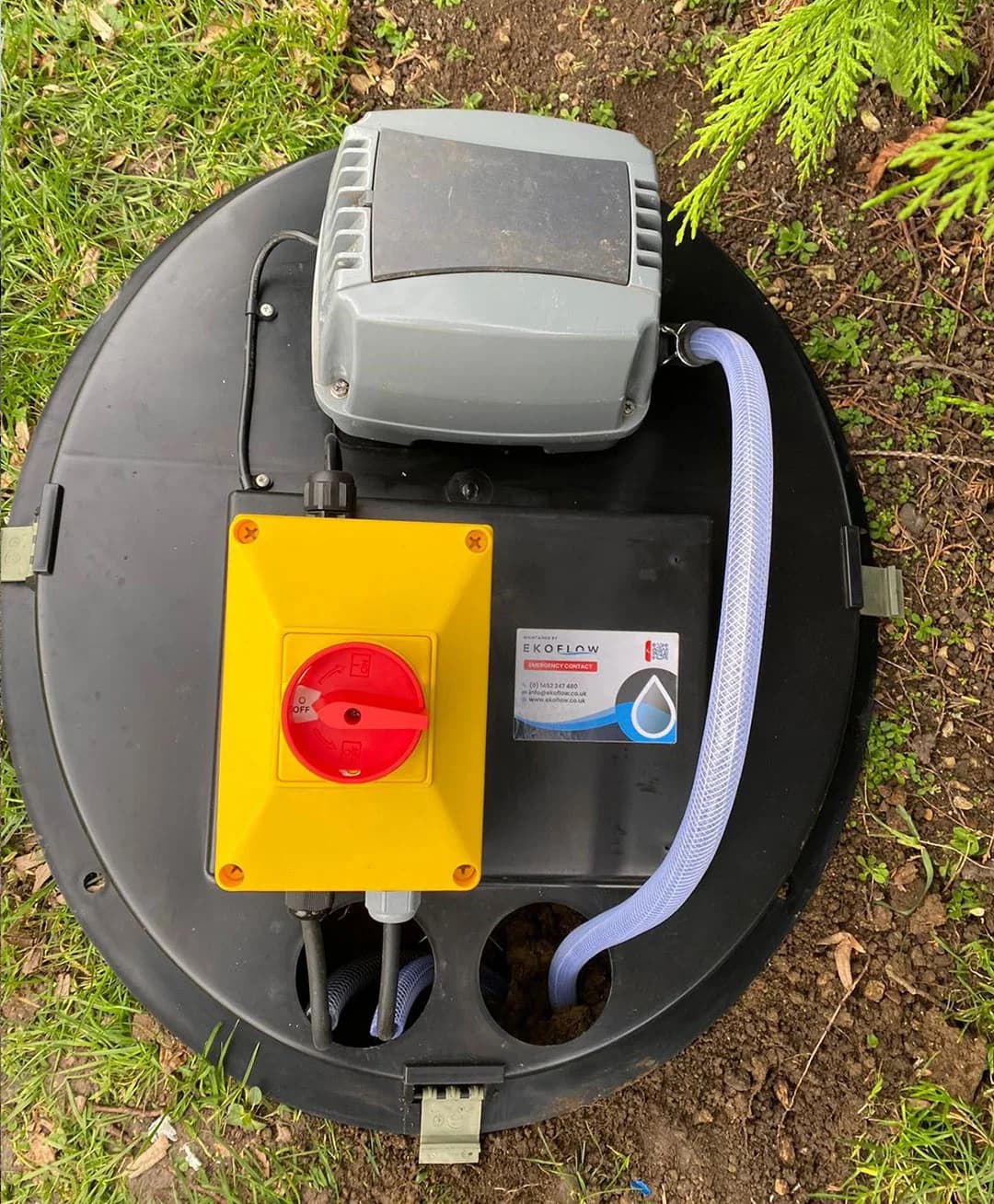
Treatment equipment at an Ekoflow project. Photograph from Ekoflow’s official website portfolio.
A septic tank is easy to forget while everything drains normally. Then a slow toilet, an unpleasant smell or an overdue maintenance reminder brings the system back into focus. Booking septic tank emptying before problems develop gives you a clearer starting point for managing wastewater at your property. It also creates an opportunity to ask whether the tank, pipework and discharge arrangements need further attention.
Ekoflow provides wastewater services from its base in Stonehouse, Gloucestershire. This guide explains how to prepare for an emptying visit, what to ask about sewage treatment plant servicing, and when drainage investigation may be needed. The aim is practical: help you describe the job accurately, understand the quotation and choose the right next step for your system.
Plan the right wastewater service
- Identify your tank or treatment plant before booking.
- Discuss emptying and mechanical servicing separately.
- Explain access, capacity and any recent symptoms.
- Keep invoices, service reports and disposal records together.
Septic tank emptying starts with understanding your system
Before arranging a tanker, establish what is installed at the property. A septic tank, a packaged sewage treatment plant and a sealed cesspool have different operating arrangements. The name used by a previous owner may be imprecise, so look for an installation manual, an earlier invoice or a service report. Those records can also reveal the manufacturer, model and approximate capacity.
If the details are missing, explain that when making your enquiry. Give the property's postcode, describe the visible covers from a safe distance and mention whether there is a control panel or alarm. Avoid guessing a tank size simply to obtain a quick price. A clear description helps the contractor decide what information is still needed and whether an inspection should come before a firm quotation.
What septic tank emptying and desludging involve
Emptying generally involves a specialist tanker removing accumulated material through suitable access points. The exact procedure depends on the system and its maintenance instructions. Ask which chambers are included, what volume the quotation covers and whether anything beyond removal is being proposed. That avoids confusing a routine emptying appointment with a wider inspection, cleaning programme or repair visit.
Ekoflow advertises tank emptying and desludging as part of its wastewater services. For your booking, confirm the relevant system type and the scope directly with the team. Explain when it was last emptied and whether any issues have appeared since then. Keep the paperwork afterwards: a dated record of what was removed is more useful for future maintenance planning than a vague memory that a tanker visited sometime last year.
How often should you arrange septic tank emptying?
For systems discharging to the ground in England, Environment Agency guidance says accumulated sludge should be removed before it exceeds maximum capacity, at least annually or in line with the manufacturer's instructions. The same guidance says the company disposing of it must be a registered waste carrier. Follow the instructions for your particular system and ask your maintenance provider to explain a suitable schedule.
Do not use the absence of smells as your only maintenance reminder. Put the recommended date in your calendar and keep the last report somewhere easy to find. If occupancy or usage changes, mention that at the next service discussion. A property used by two people most of the year may have a different pattern during extended family visits or holiday lettings. Describe the actual use rather than assuming last year's booking interval still suits it.
Signs worth reporting before the tanker arrives
Tell the contractor about slow drainage, recurring smells, unusual sounds, an alarm or water appearing where it normally does not. Include when you first noticed the change and whether it affects one fixture or several. A kitchen sink that drains slowly on its own presents a different initial picture from several toilets and drains backing up together.
Symptoms do not establish the cause by themselves. Emptying may be appropriate, but the team may also need to investigate pipework, pumps or discharge arrangements. If the same problem returns after an earlier visit, provide the date and what work was completed. That history helps frame the next enquiry. Keep people and pets away from exposed wastewater and damaged covers, and ask the contractor what immediate precautions are suitable for the situation.
Prepare access for a septic tank emptying visit
Good access information can prevent a straightforward job becoming an awkward arrival. Describe the approach road, gates, parking area and approximate distance between a possible tanker position and the tank. Mention tight corners, steep ground, soft verges and any restrictions imposed by neighbours or a shared driveway. Send photographs of the route if the booking team requests them.
Ask what needs to be accessible before the appointment. You may be able to move parked cars, unlock a gate or arrange for someone to meet the driver. Leave heavy, damaged or unfamiliar tank covers to the professionals. Do not enter a tank or attempt to inspect it from inside. Confirm who will be present, where the vehicle can stand and how the contractor should contact you if access differs from the description.
What affects the price of septic tank emptying?
A useful quotation states the work it covers. Ask about the expected volume, access assumptions, travel, disposal and any additional charges. If the tank capacity is uncertain, ask how the final charge will be calculated. If an urgent appointment is needed, confirm whether that changes the price. A written scope makes it easier to compare quotations for the same job.
This guide does not give an Ekoflow emptying price because your requirements need to be confirmed with the business. Instead, prepare the information that supports an accurate quote: postcode, system type, estimated capacity, last emptying date and access details. Ask whether VAT is included where applicable and how additional work would be agreed. Keep routine emptying, fault investigation and repairs clearly identified so the invoice matches your understanding.
When comparing two quotations, place the scope beside the price. One appointment might include removal only, while another also includes an agreed inspection. Ask each provider to clarify the difference before deciding. The useful comparison is the total charge for the work your property actually needs, with access assumptions and exclusions clearly understood.
Sewage treatment plant servicing is a separate conversation
Removing sludge and checking a treatment plant's operating equipment are different tasks. When arranging maintenance, ask whether your appointment includes both or whether separate visits are required. The relevant checks depend on the plant's design and manufacturer. Have the model information ready and describe alarms, unusual noise or any recent change in operation.
Ekoflow lists servicing, breakdown repairs, remedial work and commissioning among its services. Ask what the planned service includes, what report you will receive and how any recommended parts or repairs will be quoted. A useful report explains observations in plain language and distinguishes completed work from future recommendations. If you do not understand an item, ask the team to explain how it affects the next maintenance decision.
Coordinate emptying with servicing and follow-up work
If you are booking more than one service, ask the team to recommend the order. Some inspections may need particular operating conditions, while other work may require material to be removed first. Let the contractor plan around the actual equipment instead of assuming every task can be combined into one appointment.
Keep the booking notes specific. For example, state that you need routine emptying and also want advice about a recurring alarm, rather than simply requesting a general tank service. Confirm which person will assess the fault and whether a follow-up visit could be necessary. A combined enquiry can be convenient, but it should still produce a clear explanation of what is booked, what remains uncertain and what requires separate approval.
When blocked drains need investigation
An overflowing or slow drain can sit within a wider wastewater problem, but it can also be a local pipe issue. Describe the affected fixtures, the frequency and any work already attempted. If you have recently had the tank emptied, say so. That information helps the contractor consider whether another emptying visit is sensible or whether the pipe route needs checking.
Avoid repeatedly booking the same response without asking what the evidence suggests. A recurring blockage deserves a conversation about its cause and the available investigation options. Ask the contractor to explain the proposed method, access requirements and expected outcome. If a repair is recommended, request the location of the defect and the reasoning behind the scope. Clear findings make the next decision easier than a broad statement that the drains are problematic.
Drain jetting and CCTV drain surveys
Ekoflow offers drain jetting and CCTV drain surveys alongside its tank and treatment plant services. Jetting and camera inspection answer different booking needs, so describe whether your priority is clearing a current obstruction, investigating a repeat problem or assessing the condition of a drain. The contractor can explain which approach fits the circumstances.
For a camera survey, ask what deliverables are included. Will you receive footage, photographs, a written assessment or recommendations for further work? For clearance, ask what happens if the obstruction cannot be resolved within the agreed visit. If both services are proposed, confirm the sequence and the price for each. You should be able to understand what the investigation has established before deciding whether cleaning, monitoring or a repair is the appropriate next step.
Keep the drainage field in the maintenance discussion
The tank is only one part of a wastewater system. When discussing persistent problems, explain what you have observed around the discharge area as well as inside the property. Note where wet ground appears, whether the issue changes after rainfall and whether anything nearby has recently been altered. Observations help the conversation without requiring you to diagnose the cause.
Ask an appropriate specialist to assess the system before agreeing to major replacement work. Request a clear description of what has been inspected and what remains unknown. If further testing is recommended, ask how the results will influence the proposed solution. A quotation based on recorded findings gives you a better basis for planning than an assumption that every drainage problem must mean the whole tank needs replacing.
Make a simple maintenance file for your property
Create one folder for installation details, emptying invoices, service reports, fault investigations and agreed repairs. Label each document with the date and keep a brief note of the symptoms that prompted the visit. This takes little effort and makes future enquiries much more precise. It is especially useful when different people manage bookings over time.
For shared systems, agree who receives reports and who is responsible for arranging the next appointment. For rented properties, make sure the person handling maintenance can obtain the relevant records promptly. A contractor should not have to reconstruct the history from several incomplete conversations. Keep a simple site plan if one exists, and store the manufacturer's instructions with the service records so everyone works from the same information.
Booking for homes, businesses and shared sites
Describe how the premises operate when requesting a visit. A private home, a small workplace and a shared residential site may have different access arrangements and communication needs. Explain who can authorise the work, whether there are opening times to consider and whether the contractor needs to coordinate with a caretaker or facilities manager.
If interruption would affect customers, staff or several households, ask how the proposed visit should be planned. Avoid promising occupants that every issue will be resolved in a single appointment before the scope is confirmed. Share the booking details and the contractor's advice with the relevant people. Good coordination means the engineer arrives with access arranged, the right contact available and a clear understanding of the symptoms being investigated.
Write an enquiry that gets useful answers
A short, organised enquiry is usually easier to act on than a long description spread across several messages. Start with the service you need and your location. Then add the system details, last visit date and any current symptoms. Finish with the access information and your preferred way to be contacted. Keep photographs labelled so the booking team can understand what each one shows.
For example, explain that you are requesting scheduled septic tank emptying at a house near Stonehouse, that the previous invoice records the capacity, and that a shared driveway needs advance parking arrangements. If there is also a slow downstairs toilet, include that detail separately. This gives the contractor a practical booking question and a symptom to consider, without presenting your own diagnosis as an established fact.
Review the paperwork after the visit
Before filing the invoice, compare it with the agreed scope. Check the appointment date, the work recorded and any recommendations. If a report refers to a chamber, component or drain location you cannot identify, ask for clarification while the visit is still recent. You do not need technical expertise to request a plain explanation of what was found and what should happen next.
Where further work is suggested, distinguish an urgent action from routine monitoring or a future improvement. Ask what evidence supports the recommendation, what the quotation covers and whether another investigation is needed. Put the next maintenance date in your calendar once the team has advised it. A clear record turns a one-off appointment into a manageable maintenance plan and helps avoid overlooking an agreed follow-up.
Share useful information when plans change
Let the booking team know if conditions change before the appointment. A gate that no longer opens, roadworks on the approach or a newly parked vehicle can alter access. Equally, a new alarm or a second affected drain changes the description of the problem. Contacting the team early gives it an opportunity to review the arrangements.
If you need to rearrange, ask about notice requirements and the next available visit. Make sure anyone responsible for unlocking gates or meeting the contractor receives the revised details. Keep the final confirmation with your maintenance records.
Ekoflow's location and service enquiries
Ekoflow is based at Unit 13 Springfield Business Centre, Brunel Way, Stonehouse, GL10 3SX. Its website describes coverage across Gloucestershire, the South West, Midlands, South Wales and surrounding areas. Give the team your postcode and the service required so it can confirm availability, travel arrangements and a suitable appointment.
The published office number is 01452 247 480 and the email address is info@ekoflow.co.uk. Office hours are Monday to Friday, 7:30am to 4:30pm, with Saturday emergency contact listed from 8:00am to 4:00pm. Explain whether you are planning routine septic tank emptying or dealing with an active problem. Confirm the response arrangements directly rather than assuming a particular arrival time.
Before you request an emptying quotation
- Have your postcode and site contact ready.
- Find the system model and capacity if available.
- Check the last emptying and servicing dates.
- Describe tanker access and parking restrictions.
- List symptoms and previous investigations.
- Confirm the scope, price and paperwork included.
Frequently asked questions
Can I book emptying without knowing the tank size?
Tell the booking team that the capacity is unknown. Provide any old invoice, system label or installation paperwork you have, and describe access. Ask how the quotation will be confirmed and how any additional volume would be charged. Accurate information is more useful than an unsupported estimate.
Will emptying stop a recurring drainage problem?
That depends on the cause. Explain previous emptying dates and whether the same symptoms returned. Ask whether a drainage investigation or equipment check is needed alongside removal. Agree the next step from the contractor's assessment rather than treating another tanker visit as a guaranteed repair.
What should I keep after the appointment?
Keep the invoice, disposal documentation provided, service report and any written recommendations. Record the visit date and ask when the next emptying or inspection should be arranged. Store these with the system manual and earlier reports so future maintenance enquiries have a clear history.
Does this guide cover wastewater rules throughout the UK?
The regulatory reference here concerns England. Requirements differ elsewhere in the UK, including Wales. If your property is outside England, ask about the guidance that applies to its location. For any system, discuss the actual discharge arrangement and maintenance instructions with an appropriate specialist.
Discuss your septic tank emptying with Ekoflow
View Ekoflow's Jasoto profile, prepare your postcode and system details, and ask the team about emptying, sewage servicing or drainage investigation. Confirm availability and a written scope before booking.
View Ekoflow on Jasoto