
Global Business · Ireland Business Guide 2026
Irish Craft Trails: Make Partner Handoffs Useful to Visitors
JASOTO · Updated 29 October 2026 · 2,915 words
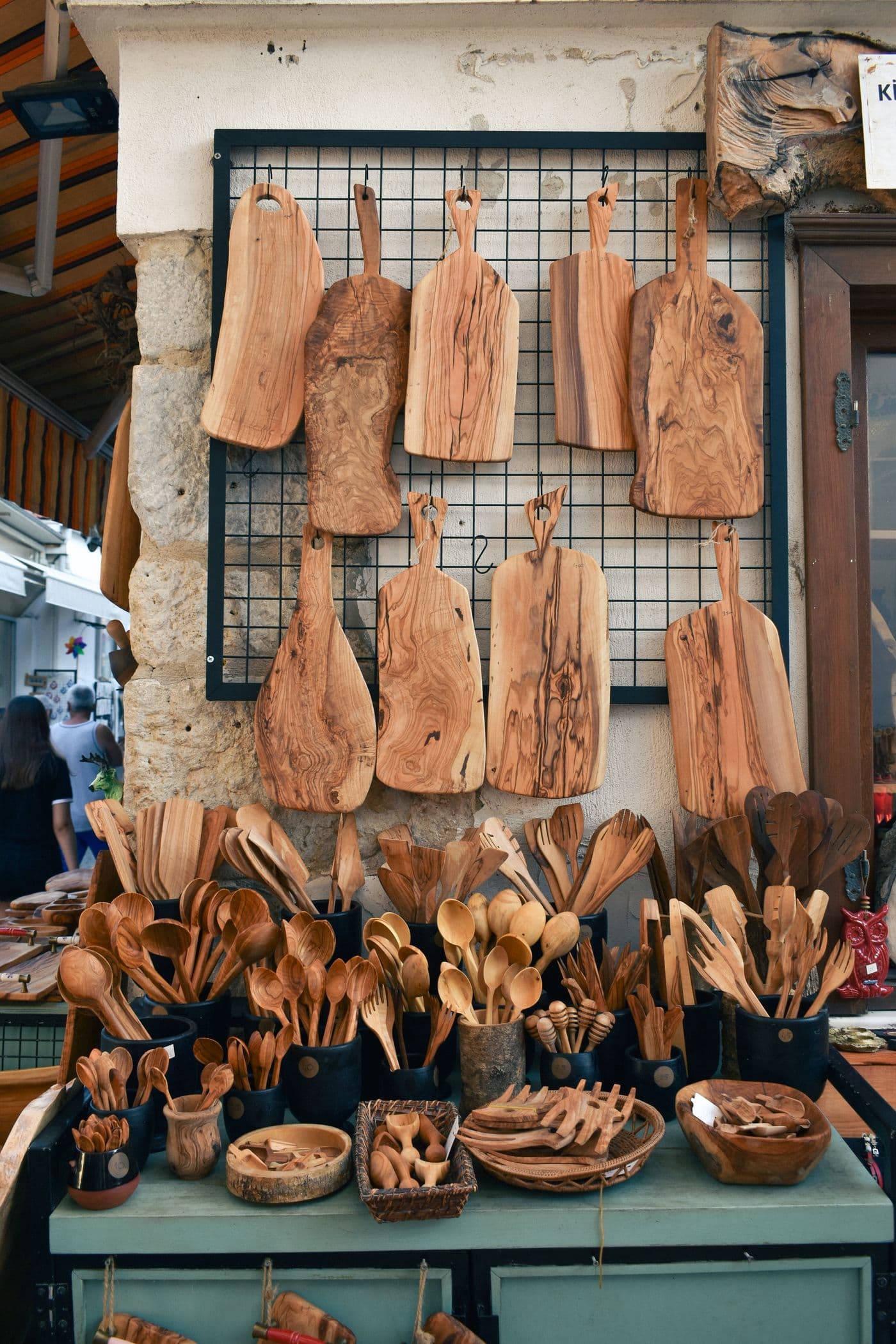
Illustrative stock photograph of wooden kitchenware in a shop; it does not document an Irish trail or the hypothetical businesses.
A visitor following a craft trail experiences the gaps between businesses as well as the individual stops. An inviting studio can still be difficult to reach when the previous partner sends someone to an old entrance, describes an appointment-only demonstration as a walk-in visit or assumes the next maker is open. For Irish craft businesses, a useful collaboration needs a dependable handoff of information. A shared leaflet and a list of logos establish recognition; they do not establish what the visitor can do at each stop today.
This guide develops a practical handoff process for a small group of independent craft businesses in Ireland. The examples are hypothetical and do not describe an official route or measured tourism results. The emphasis is on verified experiences, responsibilities and updates, with each business retaining control of its own availability and bookings. A trail through a compact town, a county route between rural studios and a partnership involving an island visit will require different travel and timing explanations. The visitor should see those real differences rather than a single cheerful promise that every stop is always ready to receive them.
Make the next stop a clear decision
- Distinguish retail browsing, demonstrations and booked workshops.
- Verify the next business's current visitor arrangement.
- Keep recommendations separate from accepted bookings.
- Assign responsibility for shared information and urgent changes.
1. Define the shared experience before drawing the route
Agree why the businesses belong together from the visitor's perspective. The connection could be a material, a local making tradition or a sequence of distinct activities. Do not invent a shared history simply because several makers operate nearby. Each participant should be able to explain its contribution in factual terms. A short common story helps people understand why another stop may interest them, while leaving room for the individual maker's own account. Keep documented facts separate from promotional interpretation and review cultural or historical claims with appropriate knowledge.
Then define what following the trail actually means. Is it a self-guided set of suggestions, a scheduled programme, a separately booked series of visits or a single coordinated experience? Those arrangements create different expectations. A visitor who sees a route map may assume the stops can be visited in sequence without further contact. If that is not true, say how the suggested route works and which decisions remain with each business. The shared description should establish the supported visitor journey before the group invests in signs, printed materials or a new website.
2. Describe each stop by the activity it supports
Create a concise experience record for every participant. Separate a shop selling finished work from a working studio open by appointment, a demonstration and a hands-on class. Record the normal visitor arrangement, the booking route, relevant duration information and practical questions that require contact. A pottery shop with a visible workspace should not be described as a class merely because visitors can see a wheel. A maker's willingness to answer a brief question does not establish an on-demand demonstration. Use wording that the receiving business has approved.
DCCI's Made Local craft experience pages distinguish opportunities such as open studios and hands-on classes across different craft categories. Use that range as context for the variety visitors may encounter, then verify the actual participants in your own collaboration. Inclusion in a public resource is not proof of a particular day's availability. The partner record should be maintained directly with the business responsible for the experience. Keep a named owner and review date so staff know whether a description is current or needs checking before making a recommendation.
Source: DCCI: Made Local craft experiences. Check the source for current guidance and terms.
3. Build a shared fact record with limited ownership
Give the collaboration one agreed source for the facts partners routinely share: business name, visitor location, experience type, current contact route and supported opening pattern. Identify which facts each participant can update directly and which shared changes need coordination. Avoid a situation where everyone edits copies of a spreadsheet and nobody knows which version governs the leaflet. A modest shared record can work well if ownership is clear. Keep private booking records out of this public information source.
Use a change log for material updates such as an entrance change, temporary closure or revised appointment process. Record the change, its effective date and the person who verified it. Partners should not have to interpret whether a new message replaces all earlier information or concerns only one weekend. Give temporary information a review date. A business pausing demonstrations for production work may still have a shop open, and those distinctions should survive the update rather than becoming a general closed label that discourages every visitor.
4. Test the journey between stops in local conditions
Assess the route as visitors will experience it, using verified travel information and the businesses' actual locations. A short distance on a county map may involve a longer road journey, a different entrance or transport that does not run when the suggested visit takes place. Do not describe a route as walkable, convenient or suitable for every visitor without checking what that claim means. Explain the relevant options and limitations in ordinary language. The route should help people plan, not imply that a map line provides an assessed journey.
Consider local patterns that affect the sequence. A compact town example might involve moving between several shops on foot, while a hypothetical rural county route needs separate journeys and appointment spacing. An island participant could involve an external transport connection that must be checked with its provider. These are different operating models. Give the visitor the information needed to choose rather than promising that every stop fits into one afternoon. If the collaboration offers suggested itineraries, label the assumptions and verify opening arrangements before presenting them as usable examples.
5. Make opening information specific to the experience
Opening hours alone may not explain availability. A shop can be open while a workshop is fully booked, and a studio can receive an agreed appointment outside retail hours. Record those distinctions in the partner fact sheet and public description. Avoid sending a visitor to an activity because the premises appear open in a search result. The receiving business should define how its availability is confirmed and which contact route is monitored. Partners can then give accurate instructions without pretending to manage each other's calendar.
Keep seasonal changes explicit. A maker may use different visitor arrangements during a busy production period or a local event. State the effective dates and review them before reprinting materials. Fáilte Ireland's community supports encourage connection with local tourism partners and Tourist Information Centres to share updates about businesses and services. Use the relevant local contacts where appropriate, while keeping responsibility for your own facts with your business. A third-party listing may help visitors discover the trail; it does not relieve participants of keeping the handoff information accurate.
Source: Fáilte Ireland: local tourism community supports. Check the source for current guidance and terms.
6. Write a recommendation that preserves the booking boundary
Prepare a short referral script for staff. It should explain why the next business may interest the visitor, what type of visit it supports and how to check or book. The script should not promise a place, a demonstration or personal attention that has not been confirmed. A recommendation is useful when it enables a decision. It becomes misleading when it sounds like an accepted booking on another business's behalf. Agree which arrangements, if any, allow a partner to make a reservation and how confirmation is recorded.
A hypothetical woodturner might tell a visitor that a nearby textile studio offers appointment-based sessions and provide its current booking link. That is different from saying the maker will be waiting for them. If a partner phones ahead at the visitor's request, confirm the actual outcome before describing the next step. A message left with no response is still a request. Record any material commitment through the authorised process rather than relying on a casual conversation that the receiving staff may never hear about.
7. Give arrival information that belongs to the next stop
Let each business verify its own entrance, parking or drop-off information and relevant visitor features. The referring partner should use that approved description rather than improvise directions from memory. A rural studio's postal address may not identify the visitor entrance, and an urban workshop may receive people through a courtyard different from the shopfront. Include readable text alongside any map and ensure links lead to the current page. Keep essential directions out of image-only leaflets that are difficult to use on a phone.
Describe relevant access features specifically and provide a contact for individual questions. Do not apply a single accessible label across the whole trail when stops differ. A visitor should be able to assess which experiences suit their plans and ask about arrangements before travelling. If several businesses share an access information format, keep the facts distinct for each one. Standard headings can improve navigation; copied claims cannot establish facilities. Staff should know where to direct a question they cannot verify rather than offer reassuring guesses about another premises.
8. Coordinate shared materials without flattening each business
Create a common information structure for the leaflet or website, but preserve the differences in activity and operation. A visitor should quickly identify the next decision at each stop: browse, enquire, reserve or attend a confirmed session. Use photographs that show actual products or spaces with the necessary permissions, and identify illustrative images clearly. Keep credits, permitted uses and current versions in a shared asset record. A business's distinctive work should not be represented by an unrelated generic craft image without explanation.
Connect shared materials to participants' public business profiles where useful, while keeping the approved trail information current. If reviewing website services, brief the provider on the individual stops, update ownership and booking boundaries. Confirm the specific service available rather than assuming a site will coordinate live availability between independent businesses. The design should help visitors find the right action and source. A visually consistent trail page can still contain several separate enquiry routes, provided the visitor understands who receives each request.
9. Handle visitor questions across languages and channels
Agree how partners handle common questions from visitors who use different languages or communication channels. Provide approved short descriptions where the businesses can support them, and have the meaning checked by a competent person. A translated booking instruction should preserve the same limitations and next steps as the original. Do not imply that staff at every stop can provide a full service in every language represented on a leaflet. State actual support and offer an appropriate contact route for further questions.
Keep language learning resources distinct from operational language capability. A business exploring language options can use that as part of staff development, but visitors still need a truthful account of what is currently supported. Where staff use prepared answers, verify that dates, opening patterns and appointment requirements remain current. A concise translated explanation can be useful if it accurately helps someone reach the next decision. An extensive translation that invents certainty about another partner's availability makes the handoff harder rather than more welcoming.
10. Plan what happens when the next stop cannot receive visitors
Create a simple process for temporary closure, sold-out sessions or other changes that affect the suggested sequence. Identify who informs partners, who updates shared materials and what staff should tell someone already following the route. A useful alternative can be offered only if it is itself verified. Do not redirect everyone automatically to another small studio without checking whether it can receive them. The collaboration should respect each participant's capacity rather than solve one business's disruption by creating another's.
Give printed materials a durable way to reach current information, such as a readable web address alongside any scannable code. Keep the current page concise enough to check during a visit. If a change is temporary, state its scope and the next review point instead of leaving an undated closure notice. Avoid blaming the receiving business in customer conversations. Explain the verified situation and the supported choices. The visitor needs a practical next step more than an account of internal coordination problems.
11. Separate visitor introductions from personal data sharing
A partner can usually provide a public contact or booking link without passing a visitor's details to another business. When a visitor asks for a specific introduction, establish what information is needed and how the request will be handled through an appropriate process. Avoid circulating phone numbers, travel plans or personal questions in a general partner group simply because everyone is part of the same trail. A collaboration does not automatically turn independent businesses into one customer record system.
Use hypothetical cases for staff training and public examples unless actual information is appropriately authorised and handled. If AI assistance helps draft a referral script, use a fictional visitor and have a person check the resulting claims about partners, availability and facilities. The tool should not generate an accepted booking or infer that a visitor has agreed to be contacted by several businesses. Keep the useful handoff focused on the public experience and the visitor's chosen next step, with personal details shared only through the actual supported arrangement.
12. Explain who handles purchases and later enquiries
Make clear whether purchases are made separately with each maker or through a specifically agreed combined arrangement. Visitors may assume a shared trail has one returns desk, one delivery service or one place to ask about a later order. If the businesses operate independently, explain which business handles each purchase and provide a readable receipt or contact reference through the actual sales process. A trail recommendation should not create the impression that another participant has accepted responsibility for a product it did not sell.
Discuss practical questions that cross the visit: carrying a fragile purchase to another stop, returning later to collect it or arranging a separate delivery enquiry. Each maker should state the options it actually supports. Do not promise that a partner can store or transport another business's goods without a confirmed arrangement. A hypothetical visitor buying a large wooden object may need to discuss collection directly with that maker before continuing the route. Staff can help identify the right contact while preserving the separate decisions involved.
13. Review the handoff through observed visitor difficulties
Ask staff to record practical difficulties: visitors arriving at the wrong entrance, expecting an unbooked class, misunderstanding the next stop's opening or struggling to identify the booking route. Do not assume a larger number of referrals means the trail is working well. The quality of the next visit matters. Share recurring themes without exposing unnecessary personal details and agree which participant owns the fix. A problem may originate in a shared leaflet even when it is discovered at another business's counter.
Run a permitted trial with someone unfamiliar with the businesses. Ask them to choose a sequence using the public information, explain which stops need booking and identify how they would check a change. Observe where they guess. Revise the source facts, scripts or layout as needed, then verify that corrections reach every relevant channel. A useful Irish craft trail is a maintained relationship between distinct experiences. It helps visitors decide what to do next while giving each participating business control of the welcome it can actually provide.
14. Schedule a shared review before the next visitor season
Hold a focused review before publishing the next seasonal version. Ask each participant to confirm its experience, visitor arrangement, contact route and responsibility for updates. Check whether any member has paused participation or changed the activity it can offer. Remove outdated promises from shared materials rather than leaving them online because the original design is convenient. A smaller current route can be more useful than a larger route containing stops that no longer support the described visit.
Give the group a simple publication checklist and a person who coordinates completion. That coordinator should gather verified information rather than become responsible for guessing missing facts. If a participant does not confirm a material detail, describe the uncertainty or pause that part of the recommendation until it is resolved. Record the version issued and where it appears, including printed stock already distributed. This makes future corrections easier and gives new staff a clear starting point when they join the collaboration.
Partner handoff review
- Define the shared story and the actual visitor model.
- Verify each stop's activity, opening pattern and booking route.
- Test journeys and arrival information between stops.
- Assign updates, temporary changes and shared asset ownership.
- Rehearse recommendations without inventing bookings or availability.
Frequently asked questions
Does appearing on a craft trail mean every studio accepts walk-ins?
No. Describe the actual arrangement at each stop and make appointment requirements clear before recommending a visit.
Can one partner confirm another maker's booking?
Only through an explicitly supported arrangement. Otherwise provide the current booking route and keep a referral separate from a reservation.
Should the whole trail share one access label?
Describe verified features and limitations for each stop so visitors can assess the individual experiences.
What should be measured first?
Review misunderstandings and failed handoffs, including wrong entrances, unbooked expectations and outdated information, alongside any actual referral records.
Explore JASOTO tools
Review public service and visitor descriptions.
Review website services →Prepare a shared information and enquiry brief.
Explore language options →Consider staff learning alongside actual visitor language support.
Explore AI assistance →Draft fictional referral wording for factual review.
Make the next visitor decision clearer
Check the experience, booking boundary and current contact route before recommending another stop.
Browse business profiles