
Travel · UK Guide 2026
Plan a Multi-Stop Business Journey Around Fixed Meetings
JASOTO · Updated 5 November 2026 · 1,647 words
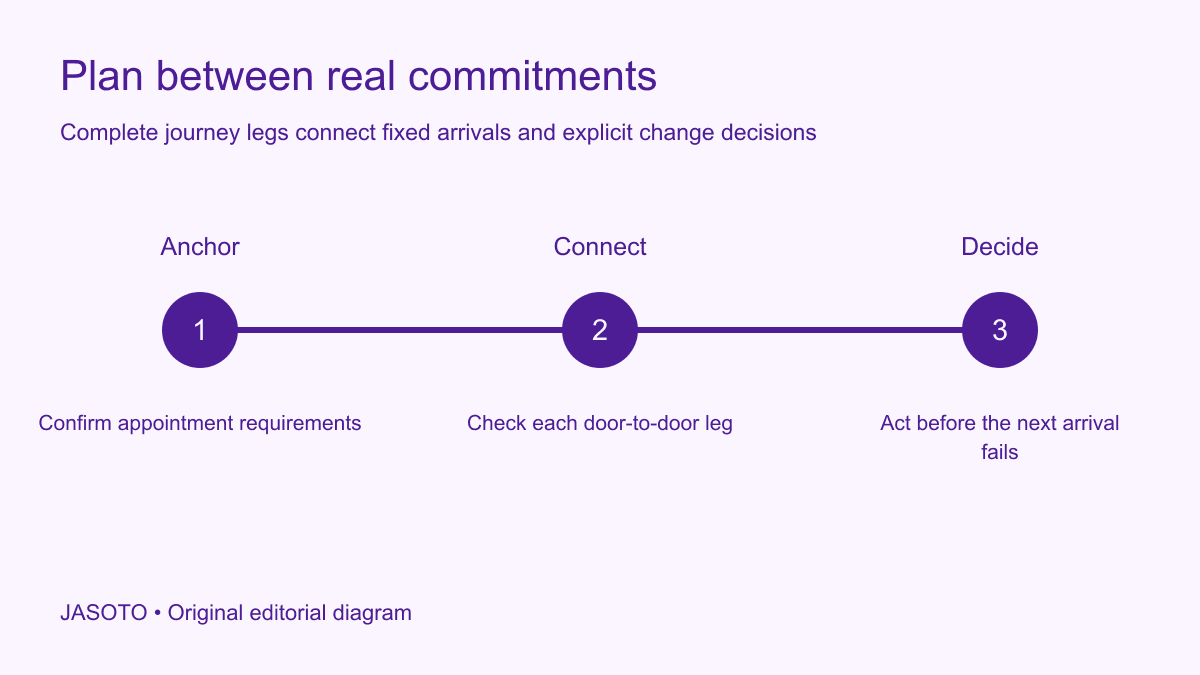
Original JASOTO editorial diagram. Its complete workflow is explained in the article; no actual customer outcome is depicted.
Plan a multi-stop business journey by fixing the appointment arrival requirements first, then checking each complete journey between them. Include leaving the building, reaching transport, changing services and entering the next venue. Identify which appointment can move and who can authorize that change. A sequence of individually possible journeys can still produce an impossible day when the meetings and local transfers are added together.
This guide offers an original planning method for UK work trips with several fixed appointments. National Rail's planner guidance explains checking dated journeys and inspecting connections and journey information. Use current operator and venue information for the actual trip. The dependency map and invented examples below help test feasibility; they do not guarantee transport or assume a meeting will end at the earliest possible time.
The practical answer
- Anchor the plan in confirmed appointment needs.
- Check complete legs between venues.
- Identify flexibility and decision authority.
- Set a trigger before the next arrival fails.
Define each appointment as an arrival requirement
For every stop, record the venue, entrance, contact, required arrival time, expected meeting length and any setup time. Separate being at the station from being ready in the room. Ask the host about access procedures where they affect timing. A meeting invitation's start time may not include finding reception or setting up a demonstration, so clarify what must be complete before the discussion begins.
Mark each detail as confirmed or pending. A proposed afternoon slot should not be treated as fixed while a confirmed morning meeting is moved around it. Keep the current host instruction alongside the plan so changes can be traced. If several people coordinate the trip, name one itinerary owner who maintains the working version. That person can organize the record without privately deciding which client commitment is less important when the schedule conflicts.
Identify what can and cannot move
Ask the responsible business contact which appointments have flexibility and what decision route applies. Some times may be fixed by a site window, another attendee's availability or a booked demonstration. Others may have an agreed range. Record the actual flexibility rather than assuming the shortest or least prestigious meeting can always be shortened. The people affected should know the options before disruption makes the decision urgent.
Keep travel constraints in the same view. A final service or a required collection time may limit the end of the day. This does not automatically make every earlier meeting subordinate to it, but it reveals the decision the team must make. A plan becomes reviewable when the constraints and tradeoffs are visible. Avoid compressing every appointment until the arithmetic works while leaving no realistic way to arrive, speak, pack and leave.
Build complete legs between the venues
Start each leg at the point where you can actually leave the previous appointment. Include returning a visitor pass, collecting equipment and reaching the exit where relevant. Then add the local route, main transport, transfer and final entrance. A rail journey between two stations describes only part of the movement between two business rooms. Use the actual venues, not simply their town names.
For an invented supplier visit followed by a client meeting, the first site is outside the station area and requires a local connection. The second venue has a different entrance from its postal address. A plan using station-to-station times alone omits both facts. Ask the hosts for appropriate arrival information and confirm local transport directly. Keep unsupported local assumptions visible until checked, rather than hiding them inside a generous-looking total that cannot be explained.
Work backwards from the tightest arrival
Identify the appointment with the least flexibility and calculate the latest practical departure from the preceding stop. Use current journey information and the actual local transfer. Compare that departure with the earlier meeting's expected finish and pack-up needs. If the times conflict, the day needs a decision before tickets are purchased. A route cannot be made feasible by writing a smaller transition interval in the itinerary.
Test the alternative order where the business purpose permits it. Changing the sequence may reduce backtracking or make a fixed appointment easier to reach. Confirm the change with hosts rather than assuming an empty calendar slot is an invitation. If the order remains fixed, consider reducing the number of stops or splitting the trip through the appropriate approval route. The planning goal is a workable set of commitments, not the maximum number of pins connected on a map.
Inspect the actual transport choices
Check journeys for the relevant date and intended time. For rail travel, inspect changes and any replacement transport shown, using the official journey information. Confirm the details that materially affect the next appointment. Keep a checked option and a plausible alternative where available. Do not assume that a later departure produces the same connection pattern or that services operate uniformly throughout the day.
Record the assumptions needed for each option. If a local pickup is unbooked, label it. If a ticket has a particular condition, check that condition with the retailer or operator before relying on a change. This guide does not establish a right to move a booking or recover a cost. The itinerary should point to the relevant reference and contact so the responsible person can act on the actual terms rather than a remembered rule from another trip.
Allocate transition time to identifiable tasks
Explain what sits between meetings: walking, equipment packing, refreshments, an access check or simply the reasonable allowance chosen for this route. A single unnamed block can make the schedule look safe while concealing a missing dependency. Identifiable tasks are easier to revise when a venue or equipment requirement changes. They also help another traveler understand why the plan departs earlier than the main service alone would suggest.
Use the circumstances to choose the allowance instead of imposing one universal number. A familiar central-office visit and an unfamiliar industrial-site demonstration may have different requirements. Ask the host about the relevant local process and use appropriate operator information. Keep essential preparation separate from optional activity. If the trip becomes tight, the team should know which interval protects a necessary arrival step and which can legitimately be changed.
Set a decision point before the schedule breaks
For the tightest leg, identify the latest point at which the next appointment remains feasible through the checked route. Agree whom you contact if the current meeting or journey reaches that point. A clear trigger gives the host time to consider a revised arrangement. Waiting until the missed appointment time to explain the delay leaves fewer useful options and can make an otherwise manageable change more disruptive.
Prepare a concise update containing your current position, the affected appointment and the decision needed. Avoid promising a precise arrival before the revised route is established. The contact may choose to move, shorten or rearrange the meeting, subject to the actual business needs. Record the agreement and update the itinerary. Do not assume that notifying a delay automatically changes a commitment or that a friendly reply confirms a new appointment time.
Keep equipment and documents connected to the route
List what must travel to each stop and what setup it requires. A display item or demonstration kit can change the local transfer and pack-up needs. Confirm relevant transport and venue arrangements before assuming an item can be carried or stored. Keep specialist handling or safety decisions with the appropriate competent people. The journey plan should expose the requirement rather than improvise a workaround on the platform.
Keep the necessary contact and reference information available offline where appropriate. Separate transport bookings, venue access and business documents clearly so the traveler can find the right item under time pressure. Avoid placing passwords or unnecessary customer material in a general itinerary. A concise accessible contact sheet is often more useful than a large document containing every email sent about the trip, particularly when several people need only the practical arrival details.
Review the whole day with the people affected
Share the proposed sequence and unresolved points with the responsible business contact before committing. Check whether each host understands the actual arrival and departure constraint. A meeting described as flexible in private planning may still have a fixed room or attendee requirement. Use the review to resolve those differences while alternatives remain available, rather than treating the itinerary as a finished announcement nobody can question.
Explore travel options once the business requirements are clear, then verify the current services and terms with providers. For a local transfer or venue service discovered through business listings, confirm the exact arrangement directly. If coordinating complex work journeys is a continuing responsibility, describe that task when planning relevant roles. The record should make authority clear: organizing the itinerary and approving a changed client commitment may belong to different people.
Replan from the next fixed commitment
During the trip, update only what has materially changed and preserve one current version. If a connection is missed, start from the next appointment's actual requirement and assess the remaining feasible options. Do not keep following an obsolete sequence simply because several bookings have already been made. Use the agreed contact route for a decision and check any booking change with the relevant provider.
Afterwards, record the planning detail that would improve another trip, such as a longer site exit process or a local transfer that needed booking. Keep the observation specific to what happened and avoid turning one disruption into a universal claim about a route. The rollback for an overloaded day is to remove or move a stop through the approved business process and restore a feasible sequence. A useful multi-stop plan connects every commitment to a complete journey and a clear decision when the original sequence no longer works.
Put the guide into practice
- Confirm entrances, hosts and setup needs.
- Inspect current dated journey information.
- Label unbooked local dependencies.
- Review the full sequence before committing.
Frequently asked questions
Can I plan using station-to-station times?
Use them as one component of each leg. Add leaving the first venue, reaching transport, transfers, the final local route and entering the next appointment. A meeting schedule can fail even when the main rail journeys are individually possible.
How much time should sit between meetings?
Base it on the actual route, access process, equipment and chosen allowance. Identify what the interval contains rather than applying a universal number. If essential tasks and checked travel do not fit, change the sequence or commitments through the appropriate decision owner.
What should I do when a meeting runs late?
Use the decision point agreed in advance, contact the responsible person and explain which next appointment is affected. Check the revised route before promising an arrival. Update the confirmed arrangement and itinerary so travelers and hosts use the same current plan.
Explore JASOTO tools
Discover providers and check support for your specific task.
Explore roles and responsibilities →Consider the practical responsibilities involved when recruiting or joining a team.
Plan work-related travel →Research a journey when joining, training or meeting colleagues in person.
Continue with JASOTO
Compare your next step
Discover UK businesses, compare services and request written quotes before making a decision.