
Business Growth · UK Guide 2026
Plan a Quiet Working Space Beside a Busy Event
JASOTO · Updated 5 November 2026 · 1,640 words
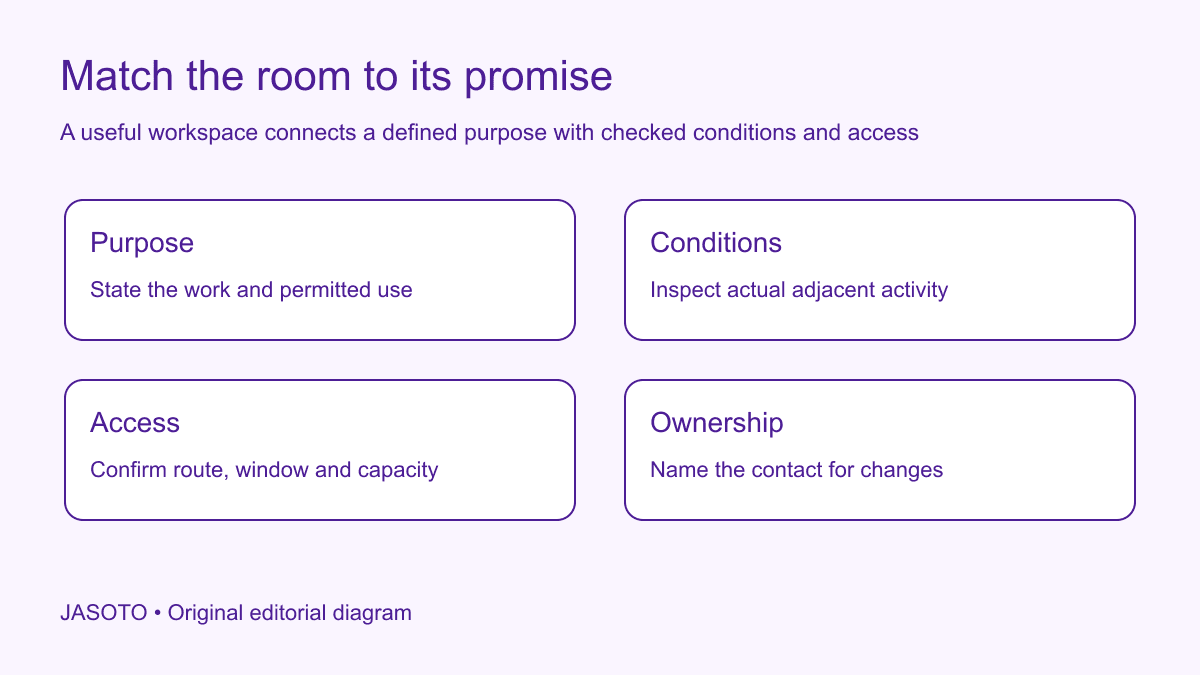
Original JASOTO editorial diagram. Its complete workflow is explained in the article; no actual customer outcome is depicted.
Plan a quiet working space by defining the work it supports, checking the actual room during relevant event activity and agreeing how people may use it. State whether calls, conversation and group work are allowed. Keep its purpose distinct from any separate rest, prayer or other space the venue provides. A room labelled quiet can disappoint people when its use and surrounding activity were never checked.
This original guide is for UK event organizers offering a place for focused tasks alongside a busy program. The University of Sheffield's venue guidance highlights background noise as a consideration when inspecting a venue. The plan below adds an original working-use check, access process and operating agreement. It does not claim that a room is silent, clinically suitable or appropriate for every individual's needs; confirm relevant requirements through the appropriate venue and support routes.
The practical answer
- Define the room’s actual working purpose.
- Check conditions during relevant event activity.
- Make calls, availability and access expectations clear.
- Keep an accountable route for practical changes.
Define the intended work and users
Write what people should be able to do in the space, such as read documents, prepare notes or complete a short individual task. Identify who may use it and how it connects to the event. A working space can need different equipment and expectations from a room for breaks or a place reserved for another purpose. Confirm that distinction before choosing a location or describing it in guest information.
Keep the promise realistic. If the room is only quieter than the main hall, say what has actually been checked rather than advertising guaranteed silence. Ask the venue about its intended use and any competing responsibility. An organizer should not reassign a room already serving another agreed need merely because it appears empty during a visit. The practical starting point is a defined service for event guests, with venue permission and an honest description of its limits.
Inspect the actual surroundings
Visit the proposed room and note nearby sources of activity, including corridors, catering areas, equipment or other sessions. Sheffield's venue guidance identifies background noise as a useful inspection consideration. Check the relevant conditions as closely as practical to the event setup, rather than judging a room only when the building is empty and all neighboring activities are absent.
Record what you observed and what remains unknown. A rehearsal can reveal a noisy door or a neighboring sound system, but it cannot guarantee every moment of the live event. Ask the venue about scheduled activity in adjacent areas and material changes planned for the day. Keep the evidence specific to the room and circumstances. A description supported by actual checks is more useful than a broad claim that the venue is peaceful because one organizer remembers enjoying it on another visit.
Confirm access and the route to the space
Identify the actual entrance, relevant level and route from the event area. Ask the venue to confirm the appropriate access arrangement and any individual question through the proper contact. A room can look suitable while being difficult to find or reach through the approved route. Do not assume that a quieter side entrance is available simply because it appears open during a walkthrough.
Keep guest directions clear and consistent with the room name used in the program. Provide a practical help route if someone needs another arrangement. Avoid collecting unnecessary personal detail to answer a basic location question. The working-space instruction should tell a guest how to reach the room and whom to ask, while private or specialist requirements remain with the responsible contact. The plan should support participation without claiming one route or room automatically meets every need.
Agree the actual use rules
Decide whether the space is for individual work, low conversation or another defined activity. State what happens with calls and meetings. A single phone conversation can change the experience for people who arrived expecting quiet reading, while a complete ban on conversation may conflict with a room advertised for collaborative preparation. Choose the rule based on the actual purpose and communicate it before use.
Keep rules short and action-oriented. For an invented conference, the room is available for individual laptop and paper work, with calls directed to a separately confirmed location. This is an editorial example, not a universal policy. The organizer and venue should agree the real arrangement. Guests should be able to tell what behavior is expected without interpreting a vague label such as respectful use that leaves incompatible assumptions unresolved until someone complains.
Check furniture, power and task needs
Identify the practical equipment needed for the stated work and confirm what is actually provided. Tables and seating may be sufficient for one purpose, while another requires an approved power or network arrangement. Ask the relevant venue contact about suitability and instructions. Do not improvise cabling, move furniture outside the approved layout or promise facilities that have not been checked.
Test a representative permitted task through the actual setup where practical. Can a guest open the necessary approved material, place their belongings appropriately and use the workspace as described? Keep sensitive content out of the test and use relevant technical support where needed. The purpose is a usable working arrangement, not a photo of an attractive room. Record any dependency and owner so the space is not announced as ready while its essential facility remains only a request.
Confirm the room's availability window
Agree when guests may use the space, who opens it and what happens when the event or venue needs it for another confirmed activity. A room being unbooked for part of the day does not establish all-day access. Connect the window to the program and communicate any interruption clearly. Avoid asking guests to begin work in a place that will unexpectedly be cleared for a meeting shortly afterwards.
Identify who maintains the availability information. If an organizer allows a temporary private session, it should go through the agreed decision route and be reflected in the current instruction. Do not let informal exceptions quietly change a shared workspace into an inaccessible room while the program continues advertising it. The operating plan should preserve a clear relationship between the promised use, actual availability and the person authorized to make a change.
Choose a proportionate admission or booking process
Determine whether guests can enter directly, ask at the desk or reserve a place through the event's actual arrangement. Confirm the suitable capacity and layout with the venue rather than inferring a limit from a photograph. Keep the process proportionate to the room and expected demand. A short drop-in space may not need a complicated booking system, while another arrangement needs a way to prevent conflicting use.
State what happens when the space is full or unavailable. Give the guest an honest contact or next option without promising another room that has not been confirmed. If a waiting or booking record is used, collect only appropriate information and follow the organization's handling arrangements. The objective is understandable access, rather than a hidden rule that favors people who happen to know the organizer or arrive through a different desk.
Assign an owner for practical issues
Name who responds to a noise, equipment or access question and what they can decide. A volunteer can receive a report while the venue owner may need to address a technical or building issue. Keep that handoff clear. Guests should not have to confront another user or alter the room setup themselves to obtain the working conditions they were told to expect.
Prepare a concise route for a conflict about use. The responsible person can restate the agreed purpose and direct another activity to its appropriate confirmed location. Avoid making personal assumptions about why someone needs the space or treating a quiet-work label as a medical service. If an individual needs another kind of support or arrangement, provide the appropriate contact. The workspace should be described and managed honestly within the event's actual responsibilities.
Test the room during the program walkthrough
Use the event rehearsal to inspect the workspace from the guest's perspective. Follow the arrival route, check the current sign and perform a representative task while relevant adjacent activity is present where practical. Ask an unfamiliar reader to explain the use rules and availability. Note the specific gap, such as an unclear call policy or a room sign that cannot be seen from the corridor.
Find possible venue or event support through business listings, then verify suitability for the actual workspace purpose. Confirm the building and receiving information before guests plan travel. If coordinating shared spaces is a recurring responsibility, describe it accurately in relevant roles, including the distinction between maintaining the instruction and approving venue changes. The walkthrough should connect those responsibilities to the final guest-facing description so an accurate plan is actually usable onsite.
Review use and restore the intended arrangement
During the event, check the room through the agreed process and respond to material changes. If adjacent activity makes the original description inaccurate, tell guests and use the appropriate venue decision route. Do not continue promising a condition known to be unavailable. Keep any change to purpose or availability reflected in the desk, signage and maintained program.
Afterwards, review the actual issue and improve the next setup. Avoid claiming the room improved productivity or wellbeing without suitable evidence; a factual account of use and reported difficulty can guide a practical revision. If the plan becomes confused, restore the defined working purpose, current availability and responsible contact, or withdraw an unsupported promise. A useful quiet workspace offers an honest, checked place for specific work, with clear expectations and a route to help when the busy event around it changes.
Put the guide into practice
- Obtain venue permission and current details.
- Test a representative task and guest route.
- Agree a full or unavailable response.
- Revise unsupported promises during the event.
Frequently asked questions
Is a quiet working room the same as a rest or prayer space?
Define and agree the actual purpose with the venue. Different uses can require different expectations and arrangements. Keep the guest information clear so someone seeking focused work does not inadvertently displace another agreed use or assume facilities that have not been confirmed.
Can the room be advertised as silent?
Describe only the condition you can support through appropriate checks and operating arrangements. A room may be quieter than the main event without being silent throughout. Check adjacent activity and communicate material limitations honestly.
Should calls be allowed?
Choose the rule according to the agreed workspace purpose and available alternatives. State it plainly before use. If calls are directed elsewhere, confirm that location rather than promising an unspecified room. Clear expectations prevent users from arriving with incompatible assumptions.
Explore JASOTO tools
Discover providers and check support for your specific task.
Explore roles and responsibilities →Consider the practical responsibilities involved when recruiting or joining a team.
Plan work-related travel →Research a journey when joining, training or meeting colleagues in person.
Continue with JASOTO
Compare your next step
Discover UK businesses, compare services and request written quotes before making a decision.