
Business Growth · UK Guide 2026
Design an Approval Log for Small Business Purchases
JASOTO · Updated November 5, 2026 · 1,604 words
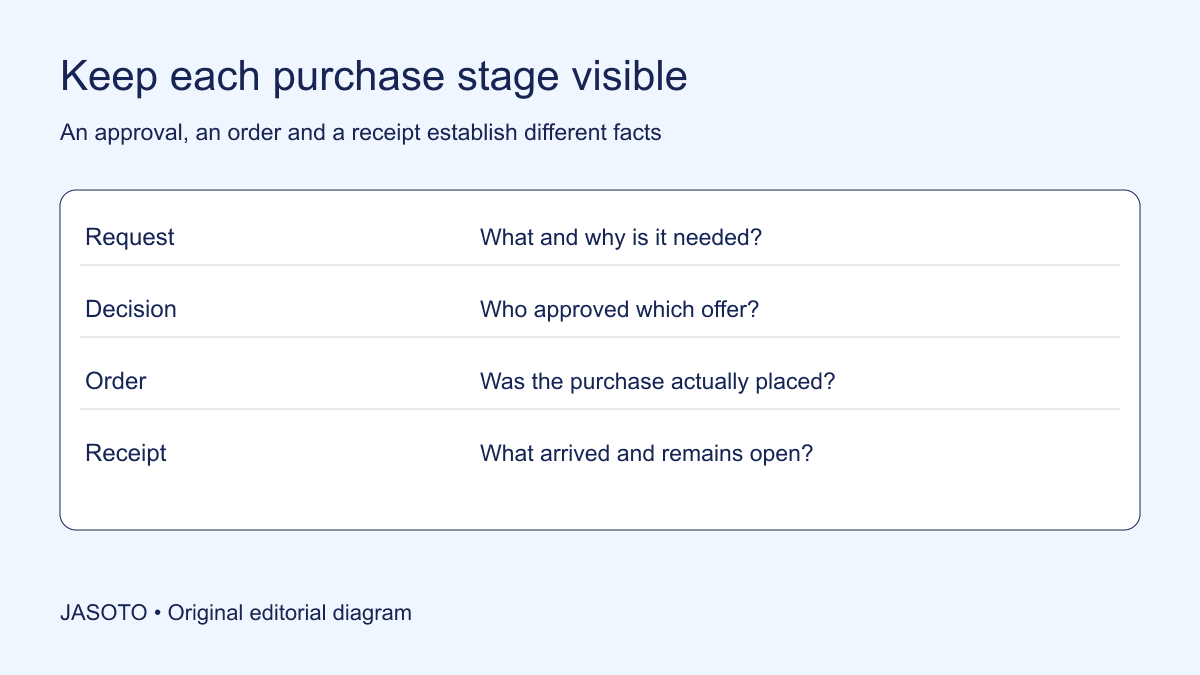
Original JASOTO editorial diagram. Its complete workflow is explained in the article; no actual customer outcome is depicted.
Design a small-purchase approval log around the item requested, business purpose, authorised decision and actual order status. Keep requested, approved, ordered and received stages separate. The log should help a colleague understand what may happen next without mistaking a manager's agreement for evidence that the purchase has already been made or delivered.
This guide is an original administrative method for small businesses in the United States. It does not set financial policy, spending limits or tax treatment. Use the business's actual authority arrangements and appropriate professional advice for accounting and legal obligations. The worked example concerns an invented office request for storage trays, where product choice and delivery terms need to remain connected to approval.
The practical answer
- Record the actual request and business purpose.
- Separate requested, approved, ordered and received states.
- Use the authority and limits the business has actually established.
- Link supporting documents without replacing the accounting process.
Define the scope of the approval process
State which purchases the log covers and which use another process. Routine replenishment, a new subscription and a specialist service can create different questions even when the amounts appear modest. Do not assume price alone captures every relevant risk or responsibility. Ask the person responsible for purchasing policy to define the appropriate route for the actual business.
Keep the scope understandable to staff. An employee should know when to submit a request, when an existing arrangement applies and whom to contact for uncertainty. Avoid inventing thresholds inside the spreadsheet because a template includes them. The record should reflect authority that has actually been established, with a current policy reference or responsible contact behind it.
Give the request a stable reference
Assign an identifier connected to the request and subsequent decision. Use it in relevant messages and order records. If a purchase is discussed in several channels, the reference helps the team recognise one request rather than creating duplicates. Preserve the original submission and add meaningful changes visibly, especially if the item or supplier changes before approval.
Do not make a row number the only identity if sorting or copying the sheet changes it. Use the business's actual system features or a consistent reference method appropriate to the workflow. Keep access and editing permissions suitable to the contents. A small log can be simple without allowing anyone to overwrite decisions or make an unapproved request look approved.
Describe the item or service precisely
Record the relevant product, quantity, variant or service scope. An entry reading office supplies gives the approver little basis for a decision. A supplier reference can support traceability, while a plain description helps someone understand it later. Keep the request specific enough that the person placing the order can identify the approved offer without guessing.
For services, state the actual deliverable and relevant exclusions. Do not describe a subscription as a one-time product if renewal is part of the offer. If the details are incomplete, record the missing question and assign it. A well-designed log should allow an honest awaiting clarification status rather than forcing staff to supply invented terms just to complete the form.
Explain the business purpose proportionately
Ask for the practical need the purchase serves and relevant timing. For storage trays, the purpose might be organising a defined set of customer order papers at a particular desk. Avoid requiring an elaborate business case for every minor request if it adds no decision value. Equally, a familiar item should not bypass a policy that actually applies because nobody wants to write a sentence.
Distinguish a required date from a supplier's confirmed delivery date. The requester may need the item before an event, while the offer has not yet established availability. Keep those facts separate. A request can be urgent from the business's perspective without giving the supplier a commitment it has never made or giving an employee additional approval authority.
Preserve the actual commercial offer
Link the relevant quotation or offer and record the confirmed price basis, quantity and important conditions. Include applicable delivery or recurring terms where they affect the decision. Use actual information and label estimates. Do not compare a quoted product total with another option that includes delivery while presenting them as equivalent amounts.
If the offer changes before ordering, refer it through the appropriate approval process. A changed variant, quantity or contract term may require a fresh decision under the business's policy. Do not silently replace the approved quote with the new one and leave the original approval date intact. The history should show which offer the approver actually considered.
Record authority and decision explicitly
Identify the authorised approver and the decision they made through the actual accepted method. Requested, approved, rejected and awaiting clarification should have clear meanings. Keep a reference to the evidence of approval where appropriate. A message acknowledging receipt of a request does not necessarily approve it, and being copied into a conversation does not establish a decision.
Record any conditions, such as approval of a named option only after a delivery question is resolved. Make the condition actionable and identify who checks it. Do not let conditional approval appear identical to unrestricted permission. If the business's formal process requires another document or system, use it and link the log rather than treating the spreadsheet as a replacement.
Separate ordering responsibility from approval
Name who may place the order and how they confirm it happened. In a small team, the approver might also be the buyer, but the record should still distinguish the stages. An approved request can remain unplaced because someone assumes the supplier was contacted by another colleague. A clear next owner prevents that gap from hiding behind an approved status.
Link the actual order confirmation and relevant supplier reference. Check that the order matches the approved item and terms through the business's normal process. If a difference is found, use the appropriate exception route rather than retrospectively changing the request to make everything appear consistent. The log should preserve what happened and support a correction, not rewrite history for neatness.
Connect receipt without replacing accounting records
Record the appropriate receipt or service-completion status and any outstanding question. A parcel arriving is not necessarily proof that all ordered items are present or that a service deliverable meets the agreed scope. Use the actual checking process and role boundaries. Keep the next action visible if clarification, a missing item or another response is needed.
The [IRS recordkeeping overview](https://www.irs.gov/businesses/small-businesses-self-employed/recordkeeping) explains that business transactions generate supporting documents relevant to business records. The approval log here is an operational link, not a complete accounting system. Preserve invoices, receipts and other required information through the appropriate process, and obtain professional advice for retention and tax requirements rather than deriving a universal rule from the log template.
Worked example: storage trays for an office desk
Imagine a small office requesting a specific quantity of storage trays in a named size. The requester explains the need and desired date, while the supplier's delivery timing remains unconfirmed. The approver authorises a defined offer subject to that timing being clarified. The buyer records the confirmation, places the order through the actual process and links the supplier reference.
When the trays arrive, the receiving colleague records the relevant outcome and keeps any invoice in the appropriate accounting workflow. This invented example claims no saving or compliance result. It illustrates how a modest purchase can remain traceable without turning a single approval tick into proof of ordering, receipt and payment.
Keep exceptions useful and factual
Distinguish a rejected request from a cancelled order. The first records a purchasing decision before a transaction; the second may require a separate supplier process and commercial confirmation. A withdrawn request is another different outcome if the business no longer needs the item. Use labels that explain those facts and keep any corresponding supplier or accounting record connected. Do not change an ordered purchase to rejected merely to remove it from an open list. A substitute colleague should be able to tell whether a supplier still expects action, payment or receipt, rather than assuming every closed row means no further work remains.
Use a short field for the unresolved question, owner and next action. Avoid a vague problem status that gives nobody a task. If a supplier reply is needed, record the actual enquiry and follow-up responsibility. Keep a target date distinct from a commitment. The log should help the team progress a stalled request rather than accumulate a list of requests whose current meaning nobody knows.
Handle sensitive or disputed matters through the appropriate process and access controls. Do not use a general purchasing sheet for unsupported allegations or private staff information. Preserve relevant evidence and ask the responsible person how a correction should be recorded. Simple purchasing administration benefits from fair factual records just as much as larger projects do.
Review the workflow with ordinary users
Ask a colleague unfamiliar with one request to identify the approved offer, next authorised action and current order state. If they cannot, clarify the labels or references. Review repeated problems such as duplicate requests, missing delivery terms or approval conditions that nobody checks. Change the specific step and keep the earlier template so a confusing revision can be reversed.
Use JASOTO businesses to discover suppliers and verify the actual offer directly. If purchasing administration becomes continuing work, explore relevant roles within a staffing review. For a confirmed collection, research travel after checking the order and appointment. A useful approval log makes authority and progress visible while preserving the proper records behind each stage.
Put the guide into practice
- Define the purchases and roles covered.
- Identify item, purpose, quoted terms and approval evidence.
- Record the order and receipt separately.
- Review recurring exceptions and keep records appropriately.
Frequently asked questions
Should every small purchase need the same approval?
Set a proportionate policy for the business's actual responsibilities and risks. This guide does not prescribe a universal spending threshold. The log should reflect the authority and process already established, including any different requirements for particular purchase types.
Is approval the same as placing the order?
No. Keep the decision and subsequent transaction distinct. Record who may order, which offer was approved and whether the order was actually placed. An approved request should not be reported as delivered or paid without the corresponding evidence.
Can the log replace receipts and invoices?
Use the appropriate accounting and recordkeeping process. The log can link requests, decisions and supporting documents, but an internal approval note does not automatically provide every record needed for accounting or tax purposes. Obtain appropriate professional advice for the business's obligations.
Explore JASOTO tools
Discuss the defined item or service and actual quoted terms directly.
Explore purchasing administration roles →Consider support when approvals, orders and records become ongoing work.
Research a confirmed supplier collection →Plan travel after checking the order and collection appointment.
Continue with JASOTO
Compare your next step
Discover UK businesses, compare services and request written quotes before making a decision.