
Global Business · United Kingdom Business Guide 2026
UK Repair Workshops: Collection, Diagnosis and Customer Handoffs
JASOTO · Updated 29 October 2026 · 3,166 words
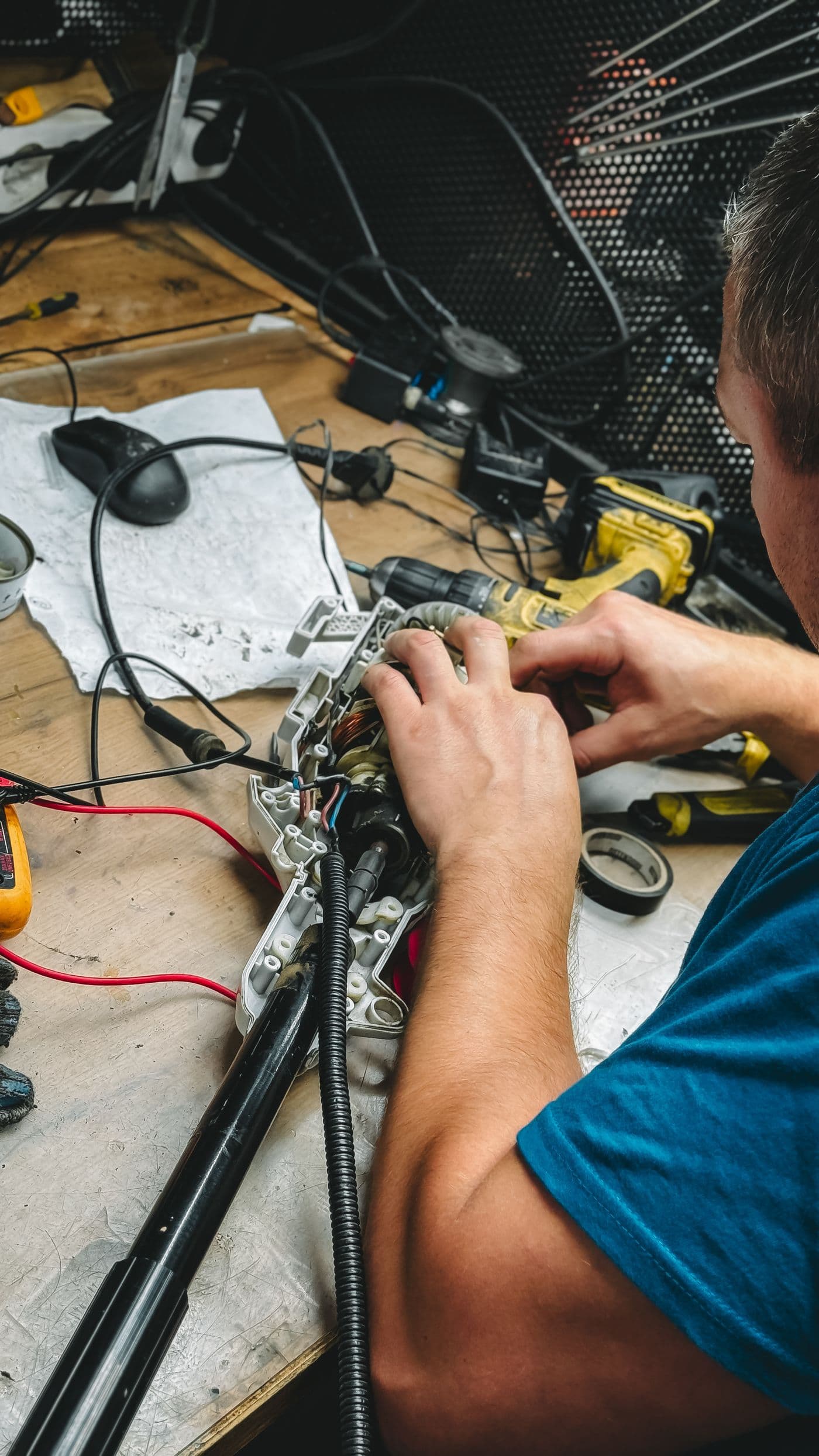
Illustrative stock photograph: technician repairing an electronic device. It does not document the hypothetical business examples or establish that the image was taken in the United Kingdom.
A repair workshop can lose a surprising amount of time before a technician touches the item. A customer arrives with an incomplete description, a collection driver cannot find the entrance, or nobody knows whether the owner approved diagnosis alone or the repair itself. These are different problems, but they share a cause: information crosses several hands without a clear record of what the next person needs. For an independent UK workshop, improving that chain can be more useful than promoting a faster turnaround that the bench cannot consistently deliver.
This guide builds a practical intake and handover process for repairable household objects, small appliances and similar workshop work. It treats a collection request, an accepted item, an assessment and an authorised repair as separate decisions. The examples are hypothetical and assume the business already has the competence and arrangements needed for its chosen equipment. Adapt the process to actual premises, opening hours, staff and service territory. A workshop in a terraced high street, a rural industrial unit and a London collection route will need different arrival and transport instructions.
Decisions to make before offering collection
- Define the equipment and faults the workshop assesses.
- Separate collection booking from diagnosis and repair approval.
- Keep accessories, item identity and condition linked throughout the job.
- Agree the return route and demonstrate the completed work at handover.
1. Define the work that can enter the workshop
Begin with a short acceptance matrix rather than a broad promise to repair anything. List equipment categories the team can assess, the information needed to identify a model, and the conditions that require an initial conversation. Distinguish an unfamiliar brand from a category outside the workshop's competence. A radio specialist may accept a clear model photograph for review while declining a large built-in appliance that cannot be handled at the premises. Customers should be able to recognise that difference before arranging transport. Describe the limits in ordinary language and assign a named person to decide borderline cases.
Then decide what the customer can do without creating extra risk or confusion. Asking for a photograph of an external label may help; asking someone to dismantle equipment to find an internal marking may create a different problem. Keep initial instructions limited to information the customer can provide safely. Write a brief escalation script for staff who answer calls: acknowledge the symptom, record the category, explain the next assessment step and avoid diagnosing from a vague description. The script should make uncertainty visible without turning every enquiry into a lengthy technical interview.
2. Turn the enquiry into a usable item brief
A useful brief records what happens, when it happens and what the customer wants to recover from the repair. A machine that does not start presents a different assessment from one that starts but behaves inconsistently after warming up. Ask the customer to describe observations in their own words, then add a separate staff summary. This preserves the distinction between the reported symptom and the workshop's interpretation. Record whether the problem is intermittent, whether any accessory is essential to reproduce it, and whether the item has already been examined elsewhere.
Design the enquiry form around those decisions. A long mandatory form may drive customers to telephone with the same information, while a single free text box can omit the model entirely. Use a small set of clear fields, offer an alternative contact route and explain how photographs will be used. If reviewing the public journey, compare the form with the service wording on the business directory. A directory can help someone find a relevant business, but the workshop still needs to verify whether the actual item fits its service before accepting it.
3. Design collection around real UK addresses
A postcode narrows a destination but does not explain the final approach. For collection, distinguish the postal address, the entrance used by the driver and the place where the item can be handed over. A flat above a shop may have a side entrance on another street. A rural unit may share a postcode with neighbouring buildings and use a named yard. Ask only for the access information the collection team needs and confirm it before the route is fixed. Avoid publicly publishing private customer directions that belong in a restricted job record.
Separate a requested collection window from a confirmed booking. Give the customer a clear message stating which stage has been reached, what they should prepare and how changes are handled. A hypothetical Manchester workshop might group suitable collections on one afternoon, while a rural repairer might assess travel individually. Neither arrangement needs an invented national service promise. Plan what happens when the driver cannot reach the customer, the item differs from the brief, or the entrance is unsuitable. Staff should know whether to pause, call the workshop or decline collection under the agreed process.
For a route that crosses several local authority areas, staff should still use the workshop's real coverage rather than assuming the word local has one meaning. Record the travel decision separately from technical acceptance so a suitable item outside the collection area can receive useful drop-off instructions. Consider how parking, loading access and staffed opening hours interact on the proposed day. A driver arriving before reception opens cannot complete the same handover as a customer bringing an item to an attended counter. Confirm the arrangement in the booking message and keep a route contact available for exceptions.
4. Record custody and accessories at acceptance
When the item arrives, create one identity that follows it through the building. Use a job reference that connects the physical tag, the intake record and later communications. Record model information in the appropriate protected system rather than depending on a photograph stored on someone's personal phone. Count the accessories that have actually arrived and describe them plainly: power lead, removable tray, case or remote control. A generic box ticked as complete cannot settle a later question about a missing part. Give the customer a readable receipt showing the accepted item and the agreed next step.
Condition photographs can help explain an existing mark or missing cover, but photographs alone are hard to search and can reveal irrelevant surroundings. Take focused images where appropriate, attach them to the job reference and add a concise description. Record who accepted the item and where it was placed. If staff move work between shelves, a simple location update is more reliable than everyone's memory of a crowded bench. The aim is a traceable custody process that fits the workshop's scale; a small team does not need elaborate software to label and account for customer property consistently.
5. Separate diagnosis from permission to repair
State what the initial assessment includes and what requires another decision. Customers can reasonably misunderstand an intake message that says the workshop will look at the item and get it sorted. Replace that phrase with the specific stage: the team will assess the reported fault, explain its findings and request approval before work outside the agreed scope. Where assessment has a charge, explain the applicable arrangement before the customer commits. Do not rely on a small note presented after the item has already been collected. Keep the wording consistent across telephone scripts, receipts and the website.
Business Companion's services guidance says work should be agreed or authorised and extra work requires the consumer's permission. It also explains that applicable guidance can differ across Britain. Use the relevant official material to review your actual terms, especially when requests are made online or at the customer's home. The operational lesson is to record the scope accepted, the person who accepted it and the communication used. A technician should be able to see whether a job is awaiting assessment, awaiting approval or ready for repair without having to interpret a customer's casual expression of interest.
Source: Business Companion: services and authorised work. Check the source for current guidance and terms.
6. Make the assessment report useful to a non-specialist
An assessment report should help the customer make a decision rather than demonstrate how much technical language the workshop knows. Start with the reported symptom, explain what the team could reproduce, then describe the proposed action and its limits. Keep observed facts separate from likely causes. If a fault could not be reproduced, say so and explain the options the workshop is prepared to offer. Avoid presenting a tentative diagnosis as certainty simply because the customer wants a quick answer. The record should remain meaningful if another member of staff handles the response tomorrow.
Explain practical dependencies alongside the proposed work. An unavailable part, a specialist test or a customer-supplied accessory may determine the next step more than bench time does. Where alternatives exist, describe the differences clearly enough for the customer to choose, without implying that every option is equally suitable. A repair proposal can identify the intended result and the checks to be performed without promising that an old item will become equivalent to a new product. Use the customer's original purpose to keep the explanation relevant: reliable everyday use, preservation of a sentimental object or investigation of an intermittent fault.
7. Manage parts and changing scope explicitly
Parts ordering creates a second chain of commitments. Before ordering, confirm which proposal version the customer accepted, whether the item specification is sufficiently identified and who will receive the delivery. Keep a record of what has been ordered against the job reference. A part with a similar name is not necessarily interchangeable, and a supplier's availability display is not the same as a part received and checked at the workshop. Make staff updates reflect those distinctions. Customers benefit more from an accurate stage description than from repeated optimistic delivery guesses.
If the bench discovers a further problem, pause at the decision boundary established in the accepted scope. Explain the new finding, its effect on the existing proposal and the available choices. Preserve the earlier version rather than silently editing the original record. For example, an initially proposed switch replacement might reveal a separate mechanical problem once assessment proceeds. The communication should show why the recommendation changed and what approval is now requested. Use a clear response channel so the technician can verify a decision before continuing; a message marked seen does not establish agreement to additional work.
8. Plan updates around events the team can verify
Choose update triggers that correspond to actual movement through the job. Useful triggers include item accepted, assessment completed, decision requested, required part received, work checked and item ready for handover. Assign responsibility for each message so a technician does not assume the reception team has sent it while reception waits for the technician. A small workshop can manage this with a daily review of jobs whose next action is overdue. Record the next action and owner, not only a status label such as pending that hides who is supposed to do something.
Set customer expectations for unanswered questions as well as routine progress. If a customer has not responded to a proposal, send a proportionate reminder through the agreed channel and explain what is waiting. Avoid repeatedly contacting someone through every available route. An owner considering JASOTO website options can use this process as the brief for clearer enquiry pages and contact instructions, then verify the specific service available for the business. A website or form does not by itself operate the workshop queue; somebody must still review incoming requests, update the job and communicate the decision.
9. Protect the information collected during repair
A repair record can contain more personal information than the team expects: a home address for collection, photographs from a kitchen, contact preferences or material stored on an electronic item. Map what is actually needed for each stage and decide where it belongs. Collection directions may be necessary for a driver, while the assessment team may need only the job reference and symptom. Avoid putting personal details on outward-facing shelf labels where visitors can read them. Discuss unusual information handling needs before accepting equipment that may contain private material, rather than improvising once it reaches the bench.
The ICO provides advice and self-serve guidance for small organisations, including sole traders. Use that resource to review the business's actual data practices and questions rather than treating a generic form as proof of compliance. Operationally, assign access, establish a retention approach and make sure staff know how to report a mistaken disclosure or misplaced record. Remove old customer documents from demonstration screenshots and training examples. If using AI assistance to improve the wording of an intake script, work with a fictional brief or appropriately prepared material and have a person verify the resulting instructions before use.
Source: ICO: advice for small and medium organisations. Check the source for current guidance and terms.
10. Prepare the completed item for a clear handover
Ready for collection should mean more than the technician has stopped working. Check that the agreed work and relevant checks are recorded, the item and accessories are reunited, and the person handling the counter can explain the outcome. Prepare a short handover note covering the work performed, any observed limitations and the contact route for a follow-up question. If the team could not reproduce an intermittent issue, that remains material information even if the item behaved normally during a later check. Do not convert an uncertain assessment into a completed repair claim at the final stage.
For collection, confirm who is coming and what the workshop needs to identify the job. For a return delivery, verify the address and access arrangement again if circumstances have changed. Allow time for appropriate explanation rather than leaving a customer to discover a loose note at home. Where a demonstration is practical, connect it to the original symptom and avoid implying a broader certification than the workshop actually provides. A hypothetical repair of a household device might include showing the restored control function and returning the old accessory listed at intake. The handover closes the record that began at acceptance.
11. Review unrepairable and uncollected work
An item that cannot proceed still needs a defined outcome. Explain whether the barrier is unavailable parts, a scope outside the workshop's competence, an uneconomic proposal declined by the customer or a fault the team could not identify. Those outcomes should not all appear as failed repair in internal reporting. They reveal different improvements: clearer acceptance information, better supplier checks or a more useful assessment explanation. Agree the return or collection arrangements and ensure staff do not infer permission to dispose of customer property from silence. Review applicable terms and obligations for the actual situation before taking further steps.
Uncollected work also consumes space and attention. Create an internal review that checks the last customer contact, the agreed arrangement and the next authorised action. Make any reminder specific and understandable, identifying the item reference and how to discuss collection. Avoid inventing a universal deadline or storage entitlement from another workshop's website. The business needs terms that fit its own circumstances and current requirements. Better intake can reduce later ambiguity by establishing the customer's preferred contact method and explaining the handover process early, but it cannot remove the need to handle exceptional cases carefully and individually.
12. Test the whole journey with one realistic trial
Before promoting collection more widely, run a permitted trial from first enquiry to final handover. Use a fictional customer record and an item the workshop is authorised to handle. Ask someone unfamiliar with the process to follow the public instructions, describe a symptom and find the correct entrance. Observe where staff need information that the form did not capture. Then follow the item tag, assessment decision and accessory list through the bench and handover stages. The useful result is a list of specific failures and fixes, rather than a declaration that the process is generally user friendly.
Review a small sample of real completed jobs after the revised process begins. Compare missing accessories, unclear approval, repeated calls about status and collections that could not be completed as planned. Interpret the reasons before changing the process again: more detailed records may reveal old problems that were previously invisible. Update the public service description and, if appropriate for the business, review the listing information so it matches the supported operation. Keep the workshop's actual acceptance limits at the centre. A reliable explanation of a modest service gives customers a firmer basis for deciding than a sweeping promise that staff must reinterpret later.
Give the revised process an owner and a review date. A new form can drift when one person adds fields for a rare problem and another removes explanations to shorten it. Keep a small change log showing the customer difficulty each revision is intended to solve. At the next review, ask reception, the collection team and the bench whether that difficulty reduced. If a change merely moves work from one person to another, decide whether the overall handoff improved. This makes the process maintainable as staff change and the workshop adds or removes supported equipment categories.
Workshop process review
- Publish accepted equipment categories and assessment limits.
- Confirm collection access, timing and the customer's preparation.
- Link item identity, accessories and custody to one job reference.
- Record assessment scope, proposal versions and repair approval.
- Prepare a handover note and a defined route for unresolved work.
Frequently asked questions
Should a collection request count as an accepted repair?
No. Record the request, confirm whether collection is available and explain what the workshop has agreed to assess before describing repair work as approved.
What should staff do when the fault cannot be reproduced?
Record the customer's description, the checks performed and the uncertainty. Explain the next options the workshop supports instead of presenting an unverified cause as a finding.
Can a workshop use the customer's original enquiry as approval for extra work?
Define and record the agreed scope. Where findings require additional work, explain the change and obtain the required customer decision before proceeding.
How should accessories be tracked?
List the accessories actually received on the intake receipt and job record, keep them linked to the item and reconcile the list before collection or return delivery.
Explore JASOTO tools
Explore public business profiles and service descriptions.
Review website options →Consider a clearer service and enquiry website brief.
Explore AI assistance →Use fictional inputs to draft wording for human review.
Review business listing information →Check the supported listing process and public business details.
Make the first repair enquiry clearer
Compare your public service description with the equipment, collection and assessment process your workshop actually supports.
Browse business services