
Daily Living UK · UK Guide 2026
Garden Furniture Winter Storage
Updated 9 September 2026 · 2,143 words
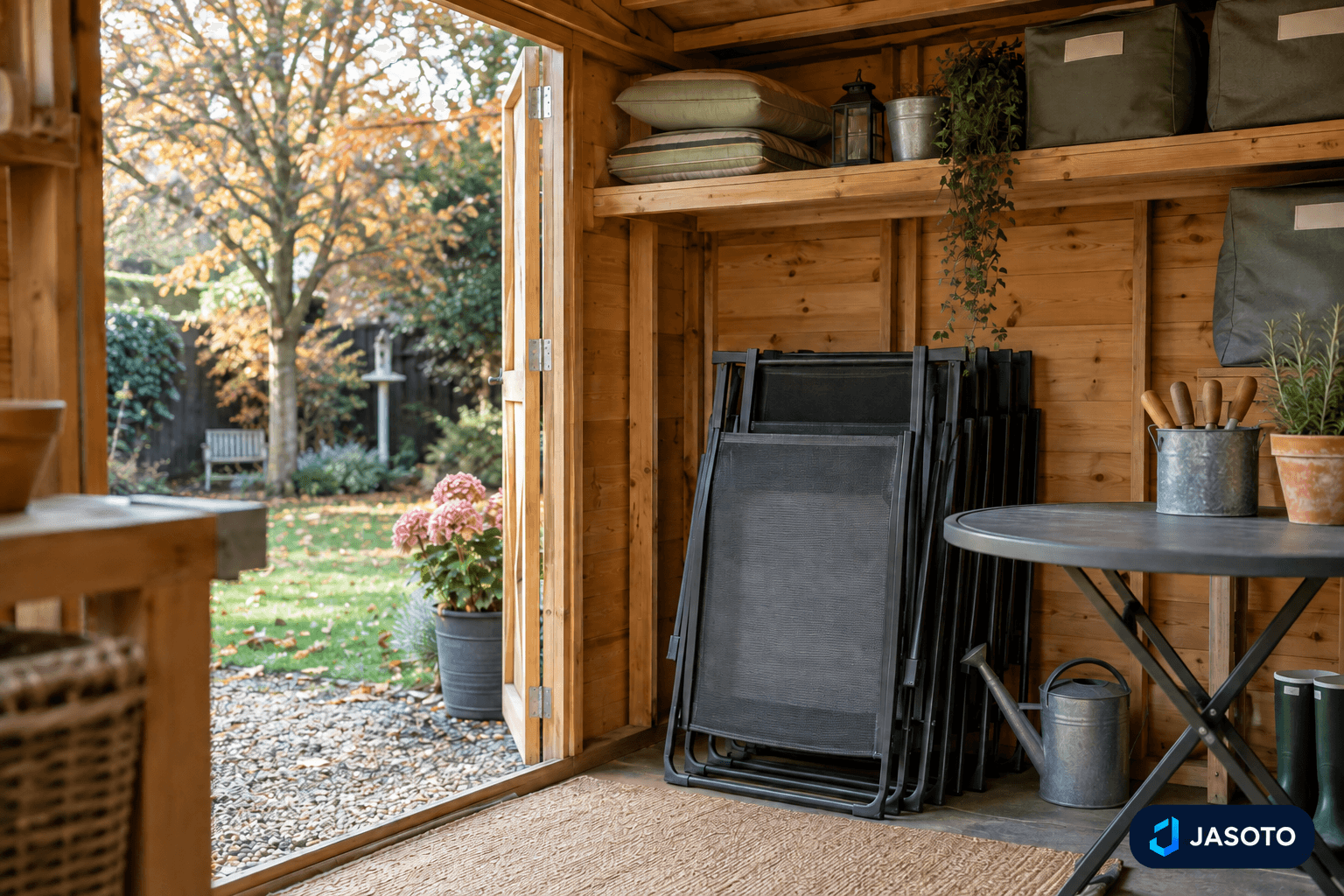
AI-generated illustrative image. It does not depict an actual customer project or a tested product.
Winter storage is easier when you start before the furniture is wet and the shed is full. That simple bit of timing matters because damp, clutter and rushed packing are what usually make a tidy plan turn into a spring headache. If you check the care instructions for each piece first, choose a dry period for cleaning and make room for anything that needs shelter, you are already reducing the main risks.
The aim is not just to hide the furniture away until warmer weather returns. It is to avoid trapping moisture, to protect finishes in the right way for the material and to spot damage before it gets worse. A sensible winter routine also makes spring easier, because you are not trying to sort missing fixings, awkward stacks or soaked cushions at the same time as you want the garden back in use.
At a glance
- Check care instructions, clean in a dry spell and match the method to the material.
- Do not pack away cushions or covers until they are fully dry.
- Use covers for outdoor items only when they fit well and allow ventilation.
- Inspect stored furniture after severe weather and keep fixings with dismantled pieces.
Start with a short inventory
Before you move anything, make a quick list of what you actually have. Tables, chairs, cushions, parasols and small accessories all need different treatment, and it is easy to forget the smaller items because they do not seem as important as the main furniture. Writing them down also helps you decide what needs to be stored together and what can be handled separately.
It is equally useful to note the material of each item and whether it folds or comes apart. A folded chair may tuck neatly against a wall, while a parasol pole or a stack of cushions might need another place entirely. If you can, save the manufacturer instructions where you will find them again in spring. That small step saves time later and avoids guessing when you no longer remember which cover or cleaning method belonged to which piece.
Measure the storage space before you fill it
Storage planning is not only about the furniture itself. The space you want to use matters just as much, because an item that fits in theory may still cause trouble once it is inside the shed or garage. Measuring with the door open is a practical way to check the real space available, not just the empty corner you can see from outside.
This is especially useful if you intend to stack or line several items together. A folded table that fits along a wall may still block access to tools, bins or the freezer, and once it is in place it can be awkward to move again. Decide what needs frequent access before you start stacking seasonal furniture in front of it. In other words, think about winter use as well as winter storage, because a crowded space tends to stay crowded once the first large piece is in.
Clean each material in the right way
Once you know what is going where, clean the furniture according to the material and finish. Loose debris can be removed first, then the care method recommended for that surface can be used. Wood, metal, resin and woven furniture may all need different treatment, so a single approach is rarely the safest choice. The general rule is to follow the instructions you have rather than assuming that what works on one chair will work on another.
If you come across a cleaner you have not used before, test it on a discreet area first. That is a sensible precaution because some finishes react badly to products that seem harmless at first glance. It is also sensible not to assume that a pressure washer is appropriate. The RHS advises that most garden furniture benefits from care and protection over winter, but the exact treatment depends on the material, so matching method to finish matters more than using the most forceful option available.
Inspect for wear while you are cleaning
Cleaning is the best time to notice problems that would be easy to miss in the summer. Check joints, feet, fasteners and coatings as you work, because these are the places where wear often shows first. A chair leg that looks fine from a distance may have a loose foot, and a table finish that still looks neat may be carrying a small area of damage that should be recorded before moisture and cold have more time to work on it.
You do not need to fix every issue immediately, but you should make a note of anything that may need parts or specialist advice. That way, winter storage becomes part of maintenance rather than a pause in maintenance. If a repair is needed, it is much easier to organise when you have already identified the problem clearly and can describe which item it relates to. Keeping that note with the inventory also helps avoid forgetting a fault until next year, when it may have become worse.
Give cushions and covers enough drying time
Cushions need extra attention because they hold moisture in a different way from the frame of a chair or table. Check whether covers are removable and washable, and follow the care label before packing anything away. The important point is not simply whether the surface feels damp, but whether the filling and seams have dried fully. Packing cushions away too early can undo all the work of cleaning them, especially if they are placed in a sealed bag or a closed storage box.
It is better to allow proper drying time than to compress slightly damp padding and hope for the best. If the outer fabric feels nearly dry, that is still not the same as fully dry. The same approach applies to any cover that has been washed or rinsed. If you are short of space, it can be tempting to squeeze everything into one place, but that often creates the very problem you were trying to avoid. Dry first, then store in a suitable dry place.
Use outdoor covers carefully if furniture stays outside
Not every item will go indoors, and that is where the cover becomes important. If furniture stays outside, choose a cover that fits its dimensions and use the manufacturer guidance on securing and ventilation. Fit is not a minor detail: a loose cover can shift, billow or leave vulnerable parts exposed, while a cover that is too tight may sit awkwardly on the piece and fail to protect it properly.
Ventilation matters because a cover should not create a sealed pocket that traps moisture. Check that rain cannot collect in a sagging pocket, and make sure the cover will not repeatedly rub against a vulnerable finish. Water resistance alone is not enough if the shape allows water to sit on top or if wind keeps moving the fabric against the same corner. In practical terms, a good cover is one that protects without creating another problem underneath it.
Prioritise what must be sheltered first
When storage space is limited, it helps to decide which items need shelter most urgently. Pieces that are more vulnerable to moisture, items with delicate finishes, and anything already showing damage should be considered before robust pieces that can stay outdoors under a suitable cover. This is not about ranking products as good or bad; it is about matching the place and the protection to the item in front of you.
A useful rule is to store the hardest-to-protect items first, then arrange the rest around them in a way that does not block access or crush softer materials. Cushions should not be treated like filler for awkward gaps, and lighter items should not be pinned under heavy ones. The right order makes the rest of the winter easier because you are less likely to disturb the arrangement every time you need to reach something else. A tidy layout also reduces the chances of leaving a vulnerable item in the wrong place simply because it was easiest to put down there at the time.
Keep the storage area organised through winter
Once everything is packed away, the job is not completely finished. It is worth making a note to inspect stored items after severe weather or if you notice signs of damp. Covers can shift, moisture can collect and stacks can become unstable, especially if the storage space is used for other things as well. A quick check after a storm or a wet spell can prevent a small problem from becoming a bigger one.
During those checks, look for displaced covers, pests and unstable stacks. Keep heavier pieces low and avoid placing loads on furniture that was not designed to support them. This is particularly important where shelves or other items are close together, because a convenient resting place today may become a damaged surface by spring. The purpose of the winter check is simple: confirm that the arrangement you made in autumn is still safe, dry and sensible now that the weather has changed.
Label fixings and photograph the finished arrangement
If you dismantle any furniture, store the fixings with it and label them clearly. Spring assembly is much smoother when bolts, screws and small fittings are already matched to the right table or chair. Without that step, you may find yourself searching through mixed boxes or guessing which part belonged where, which wastes time and can lead to the wrong pieces being used.
A photograph of the final arrangement also helps. It gives you a record of how items were stacked, where covers sat and which pieces were stored together. That can be helpful if you want to put everything back consistently after checking the storage space or after moving one item out temporarily. The picture is not there to prove anything; it is simply a practical memory aid for a job that often has more small parts than people expect.
Troubleshoot common winter storage mistakes
The most common mistake is rushing the drying stage. If cushions are packed away while still damp, or if furniture is covered before the surface is ready, moisture gets trapped and the problem starts from there. Another frequent issue is choosing storage based only on available space, without thinking about access, airflow or the need to protect a particular finish. A plan that ignores those details often looks neat on day one but becomes awkward after the first spell of wet weather.
A second problem is relying on the same treatment for every material. Wood, metal, resin and woven furniture all have their own needs, so it is worth slowing down and checking the instructions rather than assuming one cleaner or one cover will suit everything. If you are uncertain, the safest move is usually to do less, not more: use the recommended method, test any unfamiliar product discreetly and keep a note of anything that needs later attention. That approach is calmer, and it is usually easier to reverse if you have made a mistake than to repair damage caused by overconfident cleaning or packing.
Your practical checklist
- Read the care label or manufacturer instructions for each item.
- Make a quick inventory of tables, chairs, cushions, parasols and accessories.
- Measure the storage space with the door open before stacking anything.
- Clean with the right method for the material and test unfamiliar cleaners discreetly.
- Allow cushions, covers and any washed parts to dry fully before packing away.
- Label removed fixings and store them with the relevant furniture.
- Inspect covers, stacks and storage conditions after bad weather or signs of damp.
Frequently asked questions
Does all garden furniture need to go indoors for winter?
No. The right approach depends on the material, finish and manufacturer instructions. Some pieces can remain outside with suitable care, while cushions and other soft items often need different treatment.
Is a waterproof cover enough on its own?
Not always. Fit, securing and ventilation matter as well as water resistance. A cover that does not fit properly, or that traps moisture, may create a new problem instead of solving one.
Why is drying time so important before storage?
Because moisture trapped in cushions, covers or finishes can cause trouble later. Something that feels nearly dry may still hold enough dampness to matter once it is sealed away for weeks at a time.
What is the simplest way to make spring setup easier?
Keep a record of what you stored, label fixings and take a photo of the final arrangement. Those steps make it much easier to find the right parts and put items back in a consistent order.
Explore Daily Living UK
Use the guide to compare suitable products. Check the current specifications, availability, delivery and price on Daily Living UK before ordering.
Browse Daily Living UK