
Building & Trades · UK Guide 2026
How Much Does a House Extension Cost in the UK in 2026?
Updated 23 August 2026 · 1,107 words
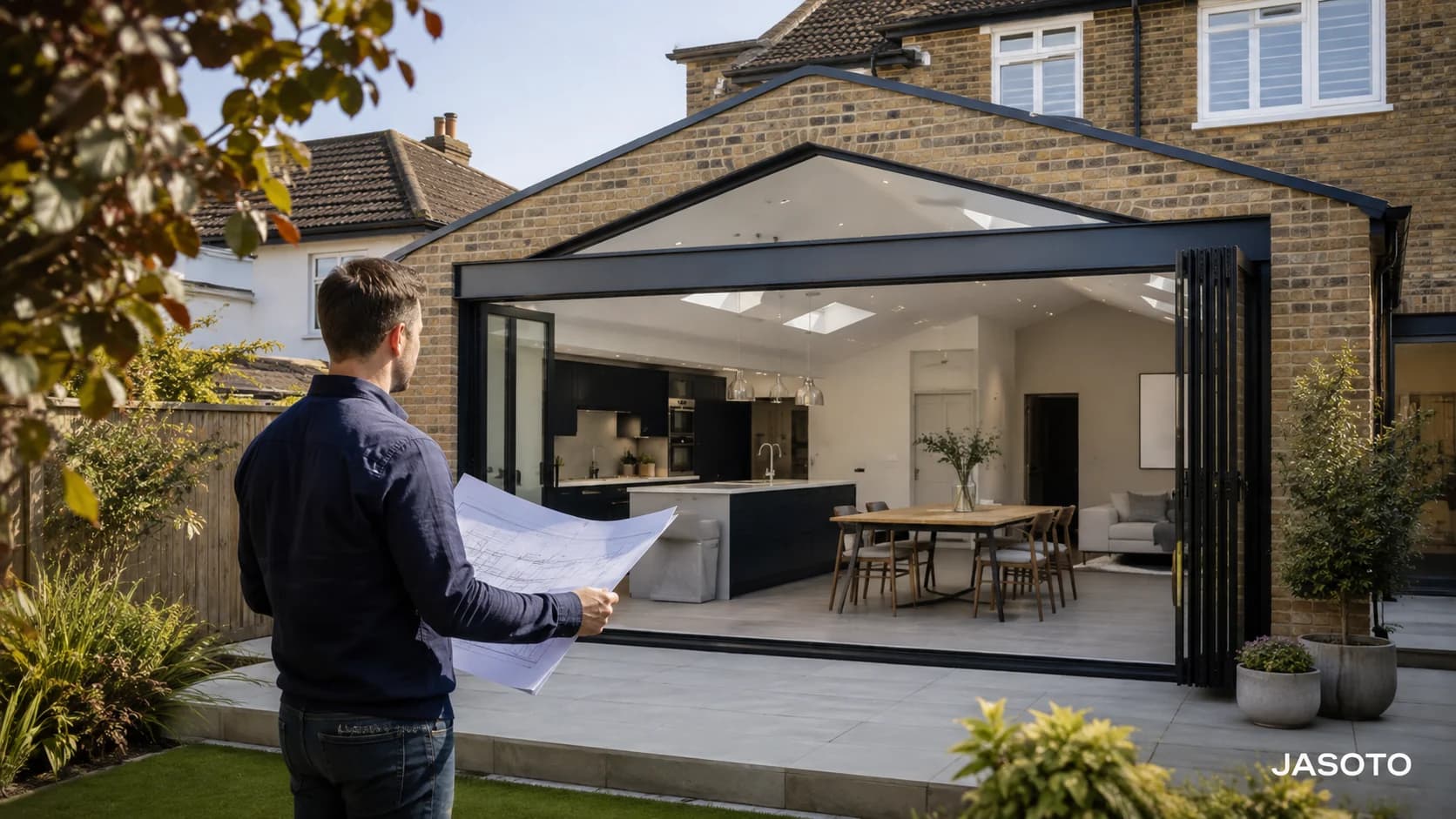
A useful budget for house extension starts with measurements, existing condition, preparation, materials, access, waste removal and the final finish, not a single national headline. Two bookings with the same name can contain very different work, so an itemised local quotation is more dependable than an isolated average.
For house extension, pay particular attention to project size and existing condition. Those details often explain why apparently similar quotations differ, while materials can decide whether later extras are likely.
Your 2026 House Extension cost checklist
- The allowance for project size can materially change the total.
- Confirm existing condition before comparing totals.
- Allow for materials and stated exclusions.
- Use written local quotations as the final benchmark.
Start with a precise specification
Write down what you expect the finished house extension service to include. Record relevant sizes, quantities, condition, access limits and the standard you want. A supplier can price more accurately when the brief distinguishes essential work from optional improvements, and you can compare responses against the same baseline.
Vague enquiries encourage assumptions. One business may allow for project size, while another may exclude it and look cheaper initially. Ask each provider to state what has been measured or inspected, what information is provisional and which change would trigger a revised price. Record how this applies to “How Much Does a House Extension Cost in the UK in 2026?”, including the answer you receive about building & trades.
Existing condition alongside materials
Existing condition often determines whether the requirement is routine or a more involved commission. The provider should describe the proposed approach, realistic alternatives and the consequence of selecting a higher or lower specification. In “How Much Does a House Extension Cost in the UK in 2026?”, this point deserves particular attention because building & trades can alter the decision or result.
Existing condition influences preparation and labour, while materials may change materials, access or finishing. Make sure both are measured against the same drawings, areas and completion standard. Record how this applies to “How Much Does a House Extension Cost in the UK in 2026?”, including the answer you receive about building & trades.
Look closely at project size
Project size can change the amount of labour, equipment or planning needed for house extension. Ask the business to explain its allowance in plain language rather than accepting a single total. That explanation is especially useful when one quote is noticeably above or below the others.
If information about project size is unavailable before work starts, agree how it will be checked and approved. A sensible quotation should separate known work from contingencies instead of treating every possible complication as an automatic extra. Record how this applies to “How Much Does a House Extension Cost in the UK in 2026?”, including the answer you receive about building & trades.
Make the quotation easy to audit
For house extension, ask for measured scope, materials and specification, labour, preparation, waste removal, finishing and guarantees. The document should also confirm whether VAT is included, how long the price remains valid, the proposed payment schedule and any customer-supplied items.
Read exclusions with the same care as inclusions. Clarify how unexpected work will be authorised, whether photographs or measurements will be provided and what happens if the agreed date changes. A short conversation now can prevent a disputed invoice later. For “How Much Does a House Extension Cost in the UK in 2026?”, apply this check specifically to building & trades instead of relying on a generic promise.
Example: comparing two different scopes
Imagine a homeowner comparing two quotations that look similar until preparation, waste removal and finishing are checked line by line. One quote might cover only the core house extension task, while another includes measured scope, materials and specification, labour. The higher total may offer better value if those items would otherwise be purchased or arranged separately.
Compare value, not only the total
Check evidence that is relevant to house extension: recent comparable projects, an itemised written quote, appropriate insurance, a realistic programme of work. Reviews are most useful when they describe similar work and mention communication, reliability and how the business handled a problem, not only the final appearance.
A very low quote deserves a polite question, not an immediate rejection or acceptance. Ask what is different about the proposed method, specification or timing. Likewise, ask a higher-priced provider to identify the extra value so you can decide whether it matters to your priorities. The practical test for “How Much Does a House Extension Cost in the UK in 2026?” is whether the relevant information about building & trades is clear and usable.
Practical ways to avoid unnecessary extras
You may be able to reduce the cost of house extension by improving access, making decisions early and avoiding last-minute changes. However, removing preparation, safety checks or essential aftercare can create false savings. Ask which adjustments change convenience and which could compromise the result.
Walk through the finished work against the written scope, list any snagging clearly and retain guarantees, product details and payment records. Record how this applies to “How Much Does a House Extension Cost in the UK in 2026?”, including the answer you receive about building & trades.
Before you commit to house extension
- Write down the exact house extension outcome you need.
- Confirm how project size will be handled.
- Ask for measured scope and materials and specification in writing.
- Check recent comparable projects before committing.
- Record exclusions, dates, payment terms and customer responsibilities.
- Keep the final agreement and important messages together.
Frequently asked questions
What affects the cost of house extension most?
Start with project size, existing condition and materials. Their importance varies by requirement, so use a written specification and ask providers to explain every assumption that affects house extension.
Should I compare more than one house extension option?
Yes. Comparing several suitable house extension options exposes differences in scope, specification, timing, support and exclusions. Give each provider the same core brief, then record any proposed improvement separately so the comparison remains fair.
What should be confirmed in writing for house extension?
Confirm measured scope, materials and specification, labour, preparation, together with price or payment terms, dates, exclusions and the process for approving a change connected with house extension.
What is a warning sign when arranging house extension?
Pressure to decide immediately, missing specifications, unclear responsibility, unexplained price changes or refusal to confirm important terms are reasons to slow down and ask more questions about house extension.
Continue with JASOTO
Compare your next step
Discover UK businesses, compare services and request written quotes before making a decision.