
Sexual Wellness · A first-time adult Christmas gift buying guide 2026
Adult Advent Calendar: A Christmas Gift Buying Guide
JASOTO · Updated 29 October 2026 · 3,820 words
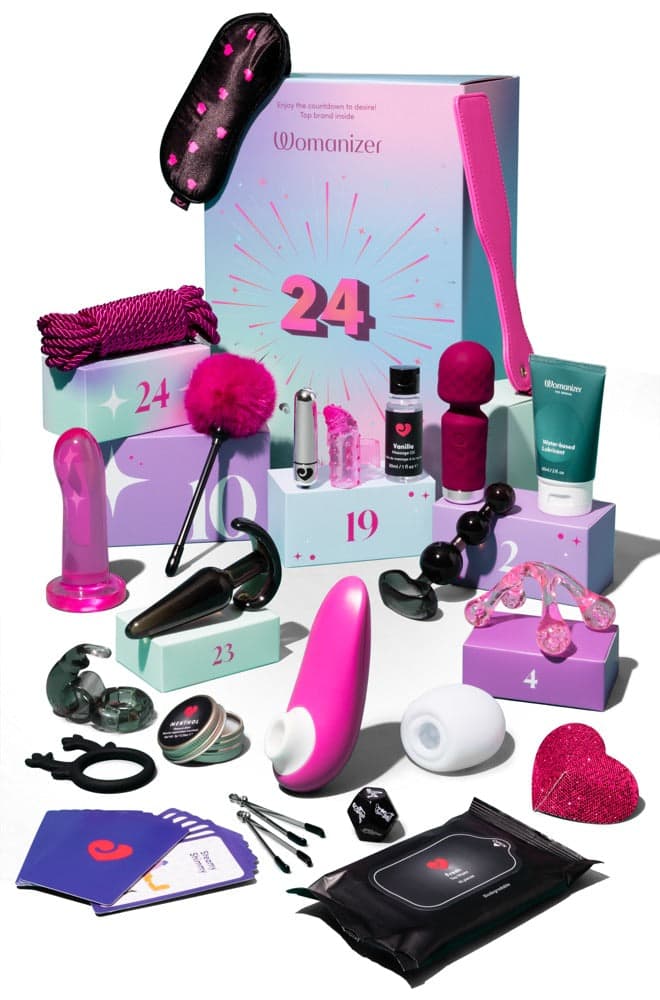
Retailer product photograph showing the pastel Enjoy 2026 calendar and arranged contents. Shown for identification; JASOTO has not tested the products.
An adult Advent calendar is an assortment sold in a festive countdown format. It can contain products, accessories, games or preparations in separate compartments or packages, depending on the edition. For a first-time buyer, the challenge is understanding what the format actually provides and whether the person receiving it wants that assortment. A larger number of days does not by itself mean a more suitable present. The useful starting point is a gift the recipient welcomes, a price you can comfortably allocate and enough product information to make the purchase without guesswork.
This UK guide explains the differences between day counts, piece counts and useful contents, then walks through a complete budget and receiving plan. It uses a House of Lucifer information snapshot checked on 29 October 2026; current prices, availability and terms must be checked before ordering. It is an adults-only buying guide, with no product testing, personal-use review or promise about the effects of a gift. The worked example is hypothetical. If the intended recipient has not welcomed an adult present, start with that conversation or choose another category rather than relying on festive packaging to make the decision acceptable.
A first calendar purchase in clear decisions
- Check whether days, pieces and compartments describe the same thing.
- Compare the exact edition with the recipient’s welcome contents.
- Set a total budget before adding delivery or optional extras.
- Plan the recipient, address, timing and return questions before opening seals.
1. Understand what the countdown does and does not promise
The countdown is a way of presenting an assortment, not a promise that every compartment contains an equivalent gift. Some calendars build around a few named products and a range of smaller accessories. Others organise a collection into an Advent-style box without matching the familiar chocolate-calendar layout. Before comparing anything, identify the seller’s actual description of the format. Look for the stated number of days or pieces, the contents information and photographs of the package. Keep these separate in your notes. A gift can be appealing in several formats, but you should know which format you are paying for.
Do not interpret an adult calendar as a course, a programme or an obligation to use a product every day. The recipient may prefer to open it all at once, leave some compartments closed or treat it as an ordinary gift box. That choice does not make the present a failure. For a beginner, this flexibility is particularly useful because there may be unfamiliar categories to consider. Your shopping task is to establish whether the collection is welcome and sufficiently described. You do not need to plan the recipient’s private activities, predict their reaction to every item or prescribe how December should unfold.
2. Compare seven, 24 and 25 as formats
A seven-day format is shorter than a 24-day countdown, but that tells you very little about product size, suitability or total value. A 24-day format conventionally supports a countdown ending on Christmas Eve, while a 25-day format can include Christmas Day. These are presentation choices, not rules for the recipient. Check the actual edition instead of using its number as a quality ranking. Someone who wants a compact gift may prefer fewer compartments; someone who enjoys a longer reveal may prefer more. Neither preference tells you which contents are acceptable.
Use the House of Lucifer adult Advent calendar collection to identify possible formats, then compare individual product records. Write the format in plain language: for example, “24-day calendar” or “25-piece Advent-style gift”. Avoid silently converting a piece count into a claim about separate doors. If photographs and written information leave the layout unclear, ask before buying. The difference matters when the presentation is part of the recipient’s request. A box containing a stated number of pieces may suit them perfectly, but it should not arrive in place of a different opening format they expected.
3. Keep days, pieces and named products in separate columns
Create a comparison sheet with three columns for the advertised format, the total stated pieces and the specifically identified products. These numbers serve different purposes. A small accessory can count as one piece, while a package of several parts may be described in another way. You cannot reliably reconstruct the complete box by counting visible objects in a styled photograph. When the written contents list is incomplete, mark that limit. It is better to know that you are buying an assortment with some uncertainty than to believe a list you have assembled from guesses.
Next, add a column for what matters to the recipient. They may want one particular model, dislike fragranced products or prefer a selection that requires little setup. Such requirements carry more weight than an extra compartment. If the purchase depends on a specific inclusion, confirm that inclusion against the exact year and edition. Save the answer with the order details. A first-time buyer should be able to explain the shortlist without specialist vocabulary: “This contains the item you asked about, these categories are welcome, and these two details still need checking.” That is more useful than repeating a promotional description.
4. Use the Enjoy listing as an identifiable starting option
The Magic Shiver × Lovehoney Enjoy 2026 calendar is listed as a 24-day edition, SKU 06386410000. Its House of Lucifer price was £99 at the 29 October 2026 check. Use those identifiers to locate the same edition when returning to the site. A saved tab, search result or shortened product name may lead to another year’s listing later. The word Enjoy does not itself establish the contents, and the retailer’s naming does not establish an official partnership or equivalence with another Lovehoney retail bundle.
For your first comparison, record only the product facts you need and the questions they leave open. You might note the format, the exact identifier and whether the disclosed categories match the recipient’s interests. Resist labelling the calendar “beginner-friendly” solely because the price is lower than another option. An assortment can include unfamiliar categories at any price. If a product’s dimensions, ingredients or charging details matter, check the information for the actual included item. This guide has not opened the calendar or verified the contents by inspection, so the listing remains the basis for product identification.
5. Read the Shunga option as a different collection
The Shunga Calendar of Desires is a 25-piece Advent-style collection, identified by SKU 252682 in the snapshot. The retailer price was £142.95 on 29 October 2026. Do not rename it as a 24-day calendar to make a comparison table look tidy. Keep the stated format visible and check the current product information for the layout and contents you need. The relevant question is whether this different assortment fits the recipient, rather than whether one extra day makes it automatically better.
Compare the nature of the collection, not simply its total with the Enjoy price. A recipient may be interested in preparations and accessories, or may prefer a particular electronic product category. Those are different gift briefs. You do not need to rank every calendar on one ladder from entry-level to premium. Make a separate line for each option’s confirmed relevance and another for unanswered questions. If you cannot explain why the recipient would welcome a substantial part of the assortment, a more clearly specified present may be easier to buy well. A brand or decorative box cannot supply that missing preference information.
6. Choose how much of the contents to reveal
First-time buyers often worry that reading a contents list will spoil the whole gift. Decide whose surprise you are protecting. If you are buying for yourself, you can choose how much detail you want. If you are buying for another adult, their preference should determine the approach. Some people want a complete list; others want to approve broad categories and keep individual reveals undisclosed. A practical middle ground is to share the category information and any material exclusions, then ask whether they want more detail. This makes the surprise a choice rather than a reason to skip a suitability check.
Keep essential information out of the spoiler category. A relevant ingredient, a required phone connection or an item that conflicts with a clear preference should not be hidden to preserve a festive reveal. You can ask a neutral question without sending a full product photograph. For example: “Would you prefer a gift with no scented preparations?” Store your comparison notes privately if the recipient does want surprise details withheld. Avoid sending an unrequested full contents image through a shared messaging thread. The aim is to give the person control over what they learn while still allowing an informed purchase.
7. Set one complete spending envelope
Start with the amount available for this gift after other commitments, then decide whether a calendar belongs within it. Include delivery, any confirmed necessary accessory and the way you plan to present the gift. Optional extras should remain optional. Do not begin with a large advertised comparison value and work backwards to justify a higher budget. MoneyHelper’s Christmas planning guidance supports allocating gift spending in advance. Applied here, that means deciding the total you can set aside before choosing between editions, and treating a smaller present as a valid outcome.
Write the envelope as a short calculation: product at current checkout price, plus delivery shown for the destination, plus essential items already confirmed, equals the planned total. Leave unknown amounts blank rather than treating them as zero. If the sum exceeds your limit, change the purchase rather than removing the unknown costs from the sheet. You can choose another format, postpone the purchase or buy something else. This is a planning tool, not a suggested amount to spend or a reason to borrow. A gift remains thoughtful when its cost fits the buyer’s circumstances and the recipient’s actual wishes.
Source: MoneyHelper: planning Christmas gift spending. Check the source for current guidance and terms.
8. Avoid the cost-per-door shortcut
Dividing the total price by the number of days produces an easy number, but it assumes the compartments are interchangeable units of value. They are not. A calendar with more pieces can include more items the recipient would not choose. A smaller collection can be a better match without being cheaper per compartment. If you use arithmetic at all, keep it descriptive rather than decisive. The buying decision should rest on wanted contents, important specifications, presentation and the total you will actually pay. None of these can be reduced to a door count.
Also distinguish a seller’s promotional valuation from your own likely spending. You would not necessarily buy every component separately, so a comparison with a claimed combined retail value does not establish a saving for you. This guide does not verify percentage savings or convert overseas reference valuations into pounds. A more practical test is to cover the promotional headline and ask whether you still want the gift at its current checkout total. If the answer becomes uncertain, identify the exact reason. You may be attracted to the offer structure rather than to a collection the recipient has a use for.
9. Define beginner-friendly in practical terms
Beginner-friendly should describe a fit with the recipient’s preferences and ability to manage the gift, not a universal quality badge. A first purchase may need clear instructions, straightforward controls, readable labels and few additional purchases. For someone else, the important feature may be knowing the contents in advance or avoiding connected products. Ask what would make the gift easy for this particular adult to accept and keep. Do not use age stereotypes or assumptions about relationship experience as a substitute for that conversation. A person can be new to buying calendars while already knowing very clearly what they do not want.
Separate “unfamiliar” from “unsuitable”, but leave both open as possible conclusions. A recipient may welcome learning about a new category at their own pace, or may prefer not to receive it at all. A calendar gives the buyer less control over individual selections than a single chosen item. That trade-off deserves an explicit decision. If too much of the collection depends on future enthusiasm, compare a simpler present. The point of a first gift is not to assemble the widest range of products. It is to make a purchase with enough clarity that the person receiving it is comfortable with the choice.
10. Put material and ingredient questions before checkout
Where a calendar includes preparations, look for ingredients, size and care information relevant to those specific products. Where it includes devices or accessories, look for their stated materials and manufacturer instructions. Do not infer these details from colour, packaging style or a broad term such as premium. If the recipient has a known purchasing requirement, ask about the exact component rather than accepting reassurance about the calendar as a whole. This guide does not assess individual medical suitability or certify material compatibility. A retailer or manufacturer may need to supply information before the buyer can decide.
Prepare focused questions that can be answered without disclosing unnecessary personal details. “Can you provide the ingredient list for the included preparation?” is clearer than “Is this safe for everyone?” If a relevant question remains unresolved, record it as a reason to pause rather than a reason to improvise. Keep general shopping research separate from product-specific instructions. Advice about one material or model should not automatically be applied to another item in the same box. This is particularly useful for a first-time buyer, because an assortment can contain several different products whose care requirements are not identical.
11. Plan the date around dispatch and delivery separately
The Enjoy calendar’s current product information asks buyers to allow five to seven business days for dispatch from a European supplier. That describes the stage before the parcel is sent, not the complete journey to the receiving address. Consult the House of Lucifer shipping policy with the product-specific notice and checkout delivery information. If a general dispatch banner appears elsewhere, do not substitute it for the calendar’s longer notice. The relevant information is the statement for the product you are actually ordering and the delivery service available to your destination.
Decide whether your intended date is the start of Advent, a private exchange before travelling or Christmas Day itself. Those are different deadlines, and the retailer cannot infer yours from a product name. Allow separate time for dispatch, the quoted delivery stage and your own handover arrangements, checking any relevant closures at purchase time. There is no guaranteed Christmas order deadline in this guide. If you cannot establish a comfortable timetable, choose a gift that does not depend on the parcel arriving for a particular opening date. A clear alternative plan is better than presenting an estimated dispatch period as a promised arrival.
12. Choose the receiving person as carefully as the address
Ask who can actually accept and keep the parcel. The buyer’s home may be shared; the recipient may be staying elsewhere; a saved checkout address may be out of date. Even a correctly addressed package can become awkward if it arrives during a family visit or is taken in by someone who routinely opens household parcels. Check the retailer’s current packaging information rather than making an assumption about what another person will see. Do not arrange delivery to a workplace, neighbour or relative without considering whether that person and location are appropriate for this particular gift.
If sending directly to another adult, confirm that they welcome the category and the receiving arrangement. A surprise parcel should not oblige them to explain it in a setting they did not choose. Decide who receives order updates and who handles a missed delivery. If the buyer will receive it first, plan how it will reach the recipient without being carried loose among other family presents. Keep the order email accessible to the buyer after handover. The product may be the recipient’s gift, but questions about payment, delivery or the original order are easier when one person remains responsible for the purchase record.
13. Read the returns position before opening anything
Review the House of Lucifer refund policy before purchase and again if a problem arises. The retailer distinguishes its voluntary return conditions from statutory rights. Check the current requirements, the contact process and any restrictions relating to seals. Do not send a parcel back to an address simply because it appears on the delivery label; obtain the seller’s return instructions for your order. A first-time buyer benefits from knowing the process before deciding to open packaging, rather than discovering it only after the gift has proved unsuitable.
GOV.UK’s guidance distinguishes online change-of-mind cancellation from goods that are faulty or misdescribed, and notes an exception for certain opened sealed hygiene goods. Do not turn that into a blanket claim that all adult gifts are either freely returnable or never returnable. If the outer calendar and individual contents have different seals, ask how the current terms apply before breaking them. Keep the proof of purchase and describe any fault or incorrect item factually. A product problem deserves its own enquiry; it should not be confused with a recipient deciding that an otherwise correctly described gift is not to their taste.
Source: GOV.UK: online returns, refunds and relevant sealed-goods exceptions. Check the source for current guidance and terms.
14. Budget for care only after checking the instructions
A calendar can leave a first-time buyer wondering whether they need a separate cleaner or other accessory immediately. Start with the instructions for the actual included products. The House of Lucifer toy cleaner collection is a category to investigate if a suitable cleaner is needed; its existence does not mean every product in the calendar requires the same preparation. Check compatibility and the manufacturer’s stated care method before adding anything. This guide does not prescribe a universal cleaning product or claim that any spray sterilises all materials.
Make a small care-information folder, physical or digital, with the exact product names and relevant instructions. Keep labels with the contents they identify rather than separating all paperwork from all products during a festive unboxing. Storage needs also vary, so follow the item-specific guidance and choose a private place away from children and pets. You do not need to buy a large set of extras to make the gift complete. The useful outcome is that the recipient can find accurate information for each item and decide whether anything else is necessary before buying it.
15. Use a complete first-purchase worksheet
Here is a hypothetical worksheet for Morgan, who wants to buy a first adult calendar as a self-gift. The purpose is a festive assortment; the limit is £120 including delivery and any confirmed essential purchase. Morgan wants the broad contents disclosed, has space in a private cupboard and will receive the parcel at home before travelling. The sheet records the Enjoy 2026 identifier and the £99 snapshot, but marks the current price and delivery charge “check at checkout”. Morgan also notes a question about the care requirements of a disclosed item. The example budget is a planning assumption, not advice about what another person should spend.
Before paying, Morgan updates the price from the live page, enters the actual delivery charge and checks whether the care question changes the total or suitability. If the result fits the limit and the receiving timetable works, Morgan saves the confirmation and the exact edition details. If a needed answer is unavailable, the decision remains pending. If the total exceeds the envelope, Morgan compares a smaller gift rather than treating optional extras as essential or extending the budget automatically. The worksheet is complete when it gives a clear reason to buy, wait or choose something else; a purchase is not required for the process to have worked.
16. Check the delivery, then hand over the gift information
When the parcel arrives, compare the delivered edition with the order and inspect the outer condition before discarding useful labels. If you see damage or an incorrect item, retain the packaging and contact the seller with the order reference and a clear description. Do not attempt repairs or open further sealed contents to diagnose a suspected fault. Where the gift is for another adult, keep the buying record available without putting private payment details into a presentation envelope. You can provide the product identifier and explain that the buyer will handle any order enquiry.
Give the recipient space to accept the gift without making a public performance of it. A practical note can say that there is no required opening schedule and that the information for the exact edition is available when wanted. If you are receiving your own purchase, the same freedom applies: the calendar need not become a December task list. Retain instructions and purchase details, then decide what suits your circumstances. A successful first purchase is one made with clear information, a workable budget and an appropriate receiving plan. The number of compartments is only one part of that decision.
Your first adult calendar order checklist
- The intended adult recipient welcomes this category of gift.
- Days, pieces and compartment format have been recorded without assumptions.
- The exact edition, year and SKU match the intended purchase.
- The current product price, delivery charge and confirmed essentials fit one total limit.
- Important ingredient, material, compatibility and care questions are answered.
- The stated dispatch stage and separate delivery information fit the receiving plan.
- The buyer knows the current return process and will retain proof of purchase.
Frequently asked questions
Is a 25-piece calendar necessarily better value than a 24-day one?
No. Pieces, days and useful contents are different measures. Compare what the recipient actually welcomes, the exact format and the total payable rather than ranking by the largest number.
What identifies the Enjoy edition discussed here?
The snapshot identifies Magic Shiver × Lovehoney Enjoy 2026 as a 24-day calendar, SKU 06386410000. It was listed at £99 on 29 October 2026; recheck the current price and details.
Does a calendar need to arrive before 1 December?
Only if that is part of the recipient’s chosen plan. It can be an ordinary Christmas gift, but do not promise a particular arrival from a dispatch estimate. Confirm delivery separately.
Can I open the whole box to decide whether to return it?
Check the current seller terms and the position for any relevant seals first. Sealed hygiene-related goods can have change-of-mind restrictions after opening; faulty or misdescribed goods raise a different question.
Should I buy a separate cleaner with every calendar?
Check the exact included products and their manufacturer care instructions first. A cleaner category does not establish universal compatibility or a requirement to buy an extra product.
Continue with clear adult buying information
Explore JASOTO guides to product preferences, thoughtful gifts and practical shopping checks.
Browse Sexual Wellness guides