
Sexual Wellness · UK Christmas Gift Guide · Adults 18+ 2026
Lovehoney Advent Calendar: Compare the 2026 Editions
JASOTO · Updated 29 October 2026 · 3,546 words
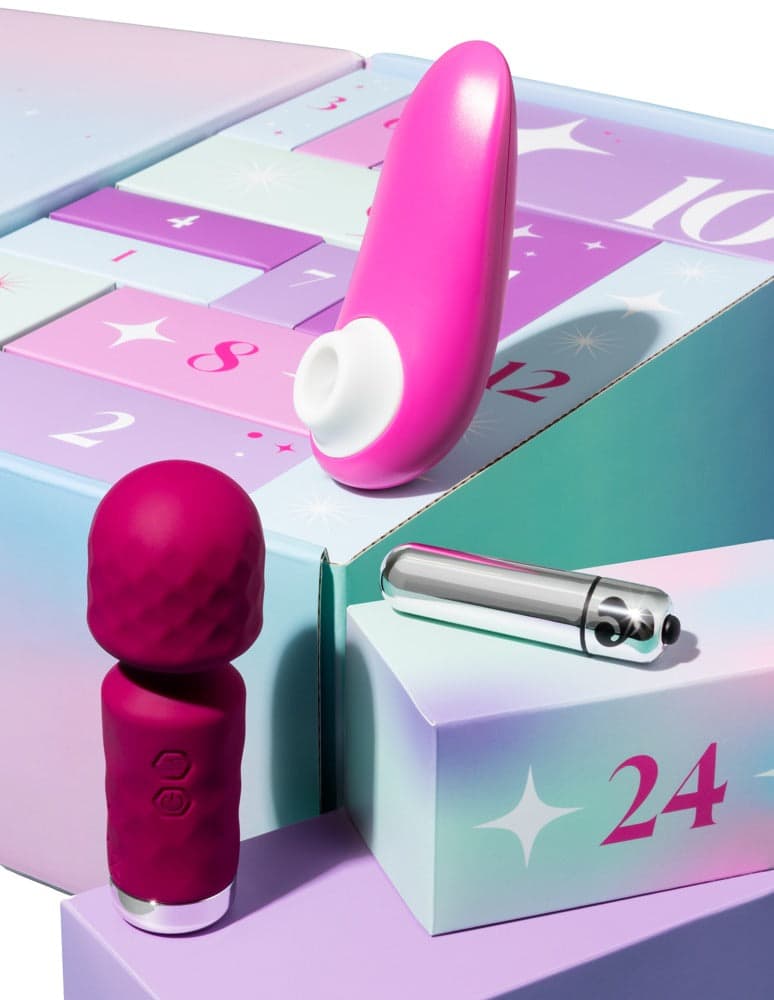
Retailer-supplied Enjoy calendar product photograph showing numbered pastel gift boxes and selected items. The photograph illustrates Enjoy only, rather than all three editions compared, and does not document JASOTO testing.
Searching for a Lovehoney advent calendar can produce several convincing-looking results with familiar names, similar photographs and different prices. Before comparing the gifts, establish which box each page actually offers. Enjoy, Couples and Luxury are useful starting names, but a name alone does not confirm the year, contents, product version or seller's terms. A careful comparison can be surprisingly straightforward once those details are placed beside one another instead of being collected from memory across several shopping tabs.
This guide compares the three 24-day editions listed by House of Lucifer, using product information checked on 29 October 2026. The retailer calls them Magic Shiver × Lovehoney and records Magic Shiver as the vendor. We use that listing language without asserting an official collaboration or declaring the boxes identical to another retailer's Lovehoney range. This is an adults-only buying guide based on published information, with no hands-on testing, performance ratings or claimed recipient results. Its purpose is to help you make an informed gift choice, including deciding that a particular calendar is unsuitable.
The comparison that matters
- Match the seller, year, calendar format and full product code before comparing apparently similar boxes.
- At the 29 October 2026 check, House of Lucifer listed Enjoy at £99, Couples at £139 and Luxury at £299; confirm current checkout totals.
- Separate wanted items from duplicates and unsuitable categories rather than treating every door as equal value.
- Resolve model-name differences and allow for the stated 5–7-business-day dispatch period, followed by delivery.
1. Start with the exact retailer listing
Begin at the House of Lucifer advent calendar collection, then open each candidate in its own tab. Copy the complete title into a comparison note rather than shortening it immediately to the brand name. Add the seller and the date checked. This prevents a photograph saved from one shop becoming the evidence for a purchase from another. It also helps distinguish a current listing from an older search result, a previous year's review or a social post that uses a convenient abbreviated name.
The multiplication sign in a retailer title is not evidence, by itself, of a particular commercial relationship between brands. Treat it as part of the advertised name and check the underlying identifiers. Likewise, a branded item appearing inside a mixed calendar does not mean that brand supplied every accessory or guarantees the whole bundle under its own direct-sale policy. You can assess the offer without resolving the history of every name: establish what this seller says it will supply, where details remain uncertain and which answers you need before purchasing.
2. Keep product codes separate from familiar names
Create an identity line for each box containing the calendar name, stated year, number of days, retailer product code and vendor. Preserve leading zeroes when copying codes. House of Lucifer's checked records identify Enjoy as 06386410000, Couples as 06386500000 and Luxury as 06386680000. These are much stronger reference points for a question to the seller than a screenshot headed Christmas calendar. They identify the records being compared; they are not a certificate of contents, an assurance of authenticity or a substitute for checking what arrives.
Different shops may use different internal references, so a mismatch does not automatically prove the products are different. Conversely, broadly matching names and colours do not establish that they are the same. Ask whether a code is the seller's stock reference or a manufacturer's identifier before comparing it across shops. If no barcode is shown, leave that field unconfirmed rather than filling it from a visually similar box. The useful outcome is a traceable comparison with known limits, not a beautifully completed spreadsheet containing guessed identifiers.
3. Enjoy: check whether the lower outlay buys the right mix
The checked Enjoy 24-day calendar listing was £99 and named Womanizer Starlet 3 among its contents. That is a short factual anchor for comparison, not a conclusion that the calendar suits every first-time buyer. Read the complete current contents description before classifying the remaining items. The meaningful question is whether the recipient welcomes the selection and its variety, particularly if one recognised product initially drew your attention to the box.
At the lower listed outlay of these three candidates, Enjoy may remain on a shortlist when its contents match the brief. It should leave the shortlist when the attraction depends on ignoring categories the recipient does not want. Do not count an unwanted accessory as useful simply because it appears behind a numbered door. Also check whether a prominent included product is already owned. A familiar name can make a calendar look reassuring while concealing a duplicate that contributes little to this particular gift. Buying the lower-priced box is still a substantial purchase.
4. Couples: make the device names a question, not an assumption
The checked Couples 24-day calendar listing was £139 and named Womanizer Liberty and We-Vibe Sync Lite. Those names distinguish the advertised offer from Enjoy, but the exact edition still matters. ORION's product page for code 06386500000 also identifies Magic Shiver and uses Liberty; its range comparison uses Liberty 2. That difference is a reason to ask the seller which model is included. It is not something to resolve by quietly adding a number to the retailer's description.
Write a focused enquiry: for calendar code 06386500000, please confirm the full model name shown on the included Womanizer packaging and whether the current contents list applies to the stock being supplied. A concrete question is easier to answer than asking whether the calendar is genuine or premium. If the model difference would change your purchase, wait for an answer you can retain with the order. The word Couples is a merchandising description, not a promise that both recipients will value every item equally or that the contents suit every relationship.
Judge the answer by whether it closes your question. A reply saying that the calendar contains a popular Womanizer product still leaves the model unresolved. A useful reply identifies the calendar reference and the full product name, or clearly explains that the seller cannot confirm it before supply. If you receive the latter answer, decide whether the uncertainty is acceptable for this gift. Do not turn it into a positive answer simply because the rest of the calendar looks attractive. Keep the original question and response together so another person helping with the purchase can understand what was actually established.
5. Luxury: require a reason for the larger commitment
The checked Luxury 24-day calendar listing was £299 and named Womanizer Enhance, We-Vibe Sync Lite and Arcwave Zing. Record those advertised names without converting them into performance claims. A higher price and several recognised products can justify closer investigation, but neither establishes that this is the most thoughtful gift for a particular recipient. The decision should rest on the wanted contents, the exact supplied versions and the amount you are comfortable spending.
Ask what would make Luxury preferable in your own comparison. A useful answer identifies specific additional wanted items or a selection the recipient has already discussed. An unhelpful answer is simply that the name sounds more generous. If most of its extra appeal comes from products already owned or categories outside the gift brief, the higher outlay has not solved the shopping problem. Keep the option open when the contents genuinely fit, and be equally comfortable removing it. A premium label should make the evidence clearer rather than replace the need for evidence.
6. Distinguish seven, twelve and twenty-four days
Lovehoney's own UK range page separately lists Romance as a seven-day calendar and Indulge as a twelve-day calendar, alongside its 24-day names. Those shorter editions are not interchangeable alternatives with missing doors. Their formats need a separate comparison of contents, intended gift occasion and opening plan. Do not import the contents of a twelve-day page into a 24-day spreadsheet because both pages mention a mini wand or share a colour scheme. A shared component is not an identifier for the whole selection.
The number of days also differs from the number of individual pieces. A door could contain a set or accessory, while a listing may group components together. If the exact count matters, ask how the seller describes the format instead of making the numbers agree yourself. Choose the rhythm before treating it as a value calculation: someone travelling during December may prefer fewer planned opening moments, while another person enjoys the presentation of a longer countdown. Neither preference makes every item wanted, and opening a box never creates an obligation to use its contents.
7. Classify contents before judging the bundle
Use three columns headed wanted, optional and unsuitable. Put each clearly identified item into one column with the recipient's preferences in mind. Wanted means there is a concrete reason for including it in this gift. Optional means it might be welcome but is not the basis for spending more. Unsuitable means it conflicts with the brief, even if another customer would enjoy it. Keep an additional unconfirmed list for items whose identity or relevant specification is unclear. Uncertainty should not earn the same positive weight as a known preference.
Agree the level of spoilers with the recipient where possible. One adult may welcome a category-level conversation and want the individual doors left undisclosed; another may prefer to check the whole inventory together. Either approach can preserve thoughtfulness. A surprise about packaging is easier to manage than a surprise about a category someone has already ruled out. When buying without a detailed discussion, favour what you actually know over assumptions based on age, gender or relationship status. A calendar's range of products is not evidence of what an individual wants.
8. Compare device editions and practical requirements
For any device that drives the purchase, make a separate identity card: full model name, included accessories, charging requirements, instructions and any feature important to the recipient. Use information for the exact model rather than borrowing specifications from a related product with a similar name. A product family may contain versions with different controls or accessories. A photograph of a charging cable does not establish that every required component is included, and an image showing several products does not tell you which parts belong to which device.
If app support matters, check the included edition with the seller and consult the current manufacturer's information for that model. We-Vibe's Sync Lite page currently describes app support, but that does not verify the contents of a particular retailer's calendar. Check phone compatibility and account requirements directly rather than assuming an app feature is either universally available or necessary for every buyer. No technical setup instructions are needed to make this shopping decision: identify the requirement, confirm the relevant information and decide whether it fits the recipient's preferences.
9. Treat care products and accessories as individual items
A bundle containing several product categories needs more than one general description. Where care products are included, review the actual ingredient information and the recipient's stated preferences about fragrance or ingredients. Do not infer that a broad term such as gentle establishes suitability. For accessories, check the material, size information and contents where relevant to the purchase. If a listing omits a detail that matters to the recipient, ask about that detail instead of treating a glossy photograph as the answer.
This is also a useful way to recognise items that add little to the gift. Several small extras can be welcome to someone who would choose them individually, while another recipient may already have suitable supplies or dislike that category. Keep those preferences in the same comparison as the headline devices. There is no need to turn every incidental item into a separate research project: identify the items that could change the decision, verify those first and stop when you have enough information to accept or reject the offer. Instructions remain specific to each supplied product.
10. Compare spending without treating doors as equal value
Use the checked purchase prices only as a dated starting point. In this three-box snapshot, Couples costs £40 more than Enjoy, while Luxury costs £160 more than Couples. Those differences describe the listed outlay, not the independent value of the additional contents. They do not include an assumed delivery charge or establish today's checkout total. Ask what you would personally gain from moving between the options, using wanted items rather than a count of everything in the box.
Do not divide the price by the door count and let that result decide the gift. It gives identical weight to a central wanted product, a duplicate and an unsuitable accessory. Similarly, an advertised total retail valuation can include items you would never buy separately. A more useful note is a short explanation: this option meets our agreed budget and includes the particular products we wanted, with these remaining uncertainties. That sentence exposes weak reasoning more quickly than a dramatic percentage saving. There is no need to claim the cheapest deal or predict a resale value.
11. Copy this comparison worksheet
Make one worksheet with these headings: checked date; seller; full title; year and day format; calendar code; advertised headline items; wanted items; duplicates; unsuitable categories; unresolved identity questions; item price; delivery charge; total payable; dispatch statement; receiving plan; return-policy questions; decision. Each row is a calendar, not a retailer tab containing several products. Add a source note for any answer confirmed in correspondence. The worksheet can be a notebook page: its purpose is to reveal the differences that influence the gift, not create a complicated scoring system.
Here is the factual starting block from the check: Enjoy, 24 days, 06386410000, £99; Couples, 24 days, 06386500000, £139; Luxury, 24 days, 06386680000, £299. Write 29 October 2026 beside it. Then complete the personal columns yourself. Delivery cost and total payable remain to be read at the relevant checkout; model questions remain open until answered. For each decision write one of shortlist, reject or awaiting answer, followed by a reason. For example, awaiting answer because the included model determines suitability is a complete and useful outcome. Do not replace it with a speculative score just to declare a winner.
Add this short enquiry template beneath the worksheet: I am considering the calendar identified in the attached listing. Please confirm the full model name of the item I have highlighted, whether the published contents describe the box currently supplied, and whether any substitutions are possible. My intended receiving destination and date are stated below; please distinguish expected dispatch from delivery when replying. Remove questions already answered clearly and include only information needed for the enquiry. Avoid sending a recipient's personal preferences or unrelated private details. When an answer arrives, enter the specific fact it confirms in the relevant field and leave anything else open. This makes the sheet useful even when the eventual decision is to wait or buy a different gift.
12. Plan dispatch and delivery as separate stages
The three checked product descriptions stated 5–7 business days for dispatch from a European supplier. Dispatch is the stage before delivery, so that statement is not a promise that a calendar will arrive within the same period. Read the current product information alongside the House of Lucifer shipping policy, then check the destination and delivery information relevant to your order. Do not use a generic store banner as a shorter promise for this specific calendar.
Work backwards from when the recipient actually needs the parcel, which may be before 1 December for a traditional opening plan. Allow room for receiving and checking the outer order, not only the final handover. Ask the seller about a material uncertainty before paying, particularly if travel or an address change could affect receipt. This guide cannot calculate a guaranteed Christmas arrival date from a dispatch range. If the timing cannot be supported, change the gift plan rather than concealing the uncertainty inside a confident promise to the recipient.
13. Read return terms before disturbing packaging
Open the House of Lucifer refund policy while comparing the calendars, rather than after a problem appears. Identify the questions relevant to a sealed multi-item gift: which conditions apply to an unwanted calendar, how the seller handles a wrong or damaged item and how to contact it. Read the current wording for the actual purchase. A policy attached to a brand's direct-sale website should not be treated as the terms of a different retailer's order.
Plan the initial check so it does not unnecessarily spoil the gift or disturb individual packaging. Match the order confirmation to the outer product identity and keep the supplied documents. If the delivered box appears to differ from what was ordered, record the visible details and contact the seller for the next step. Do not make a blanket assumption that opening one part always removes every possible remedy, or that an unopened box is automatically returnable on any terms. The practical point is to understand the process before creating a situation that requires clarification.
14. Work through one realistic gift decision
Consider a fictional example involving Sam and Alex, two adults who have discussed exchanging a shared December gift. They set a maximum total spend of £150, want a 24-day presentation and already own a Starlet 3. They are interested in the named Sync Lite but want to confirm the exact included edition before ordering. These are invented preferences for demonstrating the worksheet, not a recommendation based on testing. Enjoy is marked reject because a major point of interest would duplicate something they already own; Luxury is marked reject because the checked item price alone exceeds their total budget.
Couples is marked awaiting answer. Its checked £139 item price leaves £11 within their fictional total limit for any applicable delivery charge, but that is not a quoted shipping price. Sam asks the model question, reviews the complete current contents against their exclusions and checks the actual payable total. If those checks meet the brief, the row can move to shortlist; if the answer or total does not fit, they choose another gift. The useful result is the reasoning, not a claim that every couple with £150 should buy the same box. They have narrowed the decision without inventing contents, ignoring a duplicate or treating interest as a purchase commitment.
15. Confirm the final choice and hand over the information
Before ordering, read the chosen row once more against the live product page and checkout. Confirm the seller, full calendar name, code where shown, current total and the address used for receipt. Retain any answer that influenced the purchase with the order confirmation. If a material detail has changed since the worksheet was prepared, reconsider that decision rather than assuming the older snapshot governs a new order. This final pass is particularly useful when several similar calendars have remained open in different tabs.
At handover, give the recipient the information they need without making the gift feel like an obligation. Agree who retains the order details and how a product or delivery question can be raised. The recipient can choose the opening pace and set aside items they do not want. A well-chosen calendar is one whose advertised identity, wanted contents, budget and receiving arrangements fit the real gift. Enjoy, Couples or Luxury can only become the right option after those checks; the most impressive title is not the answer on its own.
Before choosing Enjoy, Couples or Luxury
- Copy the full retailer title, 2026 format and calendar code without dropping leading zeroes.
- Check wanted items, existing duplicates, excluded categories and the recipient's preferred spoiler level.
- Resolve model-name differences and any required app or charging information.
- Confirm today's payable total and the separate dispatch and delivery arrangements.
- Read current return terms and retain the order identity and relevant retailer answers.
Frequently asked questions
Are House of Lucifer's Magic Shiver × Lovehoney calendars proven identical to Lovehoney's direct-sale editions?
No such identity is established here. Match the current seller listing, year, code and complete contents. Familiar names or photographs do not establish that two whole bundles are the same.
Why does the Couples comparison leave the Womanizer model name unresolved?
The checked retailer description and ORION's product page use Liberty, while ORION's range table uses Liberty 2. Ask the seller to confirm the full model supplied for calendar code 06386500000 if that distinction affects your choice.
Can the £139 Couples calendar fit a £150 gift budget?
Only if the current item price, any applicable delivery charge and other payable costs remain within that total. The fictional worksheet's £11 difference is arithmetic, not a delivery quotation.
Does a 5–7-business-day dispatch statement mean arrival within seven business days?
No. The checked statement concerned dispatch from the supplier, followed by delivery. Verify current order-specific information and avoid promising a Christmas arrival date from that statement alone.
Choose from the facts that matter to your gift
Use the comparison worksheet, resolve material product questions and read the other Christmas guides before choosing a calendar.
Read more JASOTO gift guides