
Shopping Guides · UK Guide 2026
Camping Essentials Checklist UK: What to Pack
Updated 23 August 2026 · 807 words
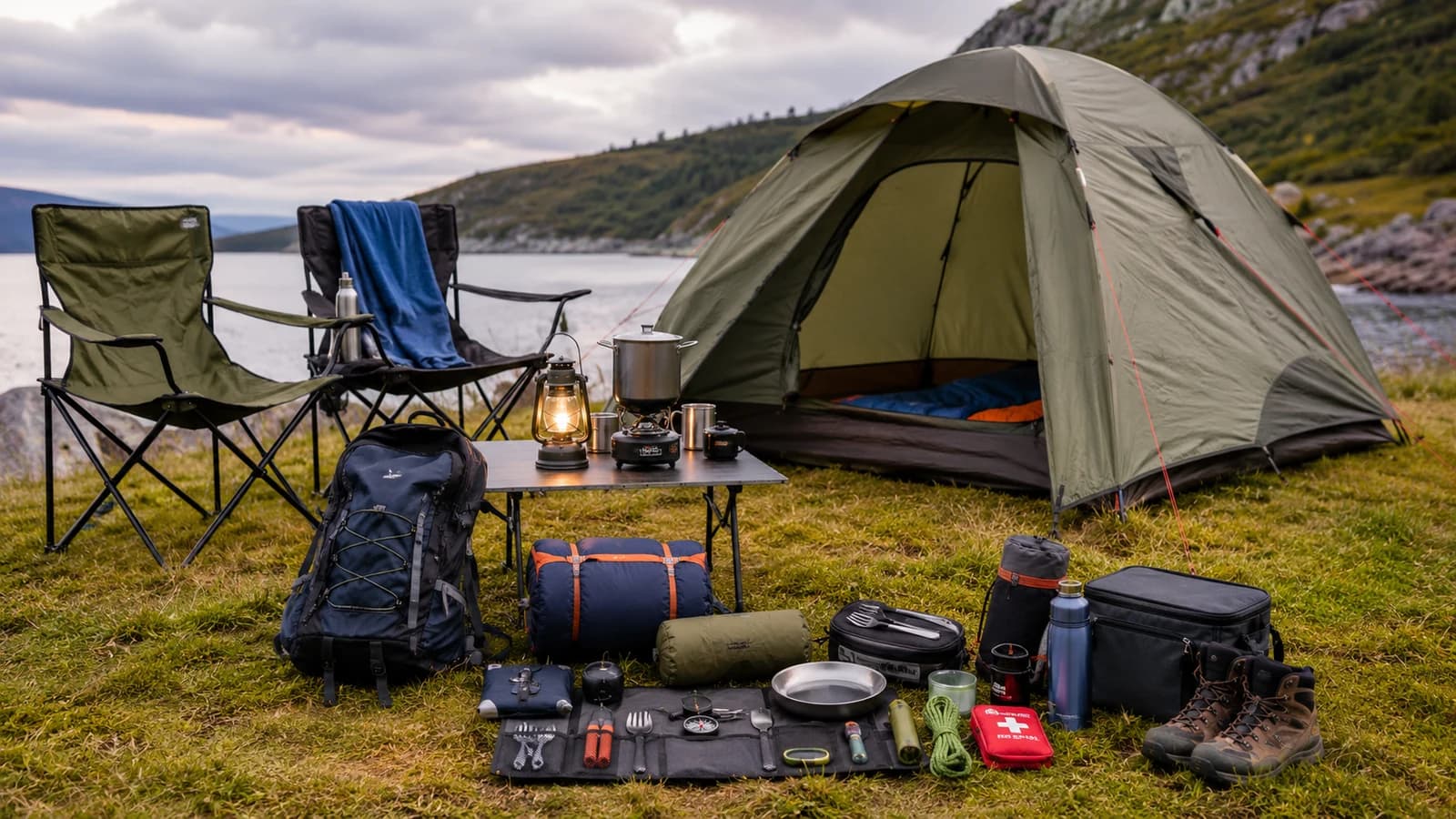
A good camping trip normally depends more on preparation than expensive equipment. Forgetting one basic item can create more problems than leaving behind several optional accessories.
The right packing list depends on the season, campsite facilities, number of people and whether you are travelling by car or carrying your equipment.
Camping essentials at a glance
- Use a tent with enough space for the people and equipment inside.
- Pack sleeping equipment suitable for the expected overnight temperature.
- Carry reliable lighting and spare power where appropriate.
- Plan food, water and cooking before leaving home.
- Prepare for rain and changing UK weather even when the forecast looks good.
Tent and shelter
Your tent is the main protection between you and the weather, so capacity and waterproofing matter more than unnecessary features. Remember that a tent advertised for a certain number of people may provide limited room once bags and equipment are inside.
Check the tent before travelling. Make sure poles, pegs, guy lines and any separate groundsheet are present and that you understand how the tent is pitched.
Sleeping equipment
A sleeping bag should suit the temperatures you expect to experience rather than simply looking thick. A sleeping mat, air bed or camping bed also provides insulation from the ground as well as comfort.
Take a pillow or compact alternative and keep sleeping equipment dry during transport.
- Sleeping bag
- Sleeping mat or camping bed
- Pillow
- Dry bag or waterproof storage
Lighting and power
A campsite becomes very different after dark. Keep at least one dependable torch or lantern accessible rather than buried in a bag.
Rechargeable camping lights can be convenient, but check battery life before travelling. A separate torch provides useful backup.
Cooking, food and water
Plan meals before packing so you know exactly which cooking equipment is required. Check campsite rules before taking a stove or barbecue, particularly during dry weather.
Bring enough drinking water or confirm that the campsite has a reliable potable-water supply. Store food securely and keep raw and cooked food separated.
Comfort and weather protection
Folding camping chairs, a small table and organised storage make a campsite much easier to use. Clothing should be layered so you can adapt as temperatures change.
UK weather can change quickly, so waterproof clothing and spare dry socks are worth carrying even when rain is not expected.
Plan around the campsite facilities
Before packing, check exactly what your campsite provides. Facilities vary considerably: some sites have electrical hook-ups, showers, drinking water, washing-up areas and on-site shops, while more basic sites may provide very little.
Knowing what is available prevents unnecessary packing and helps you identify anything essential that must be brought from home. It is also worth checking arrival times, vehicle access, quiet hours and rules concerning fires, barbecues and cooking equipment.
If electrical hook-up is available, use equipment designed for campsite use rather than ordinary indoor extension leads. If you are camping without electricity, plan how you will keep phones, lights and other essential devices charged.
Prepare for British weather
Even summer camping in the UK can involve cold evenings, rain and strong wind. Pack clothing in layers so you can adapt throughout the day rather than relying on one heavy item.
A waterproof outer layer, spare socks and dry clothes stored inside a waterproof bag can make a significant difference if conditions deteriorate. Avoid allowing wet clothing or footwear to come into contact with sleeping bags and bedding.
Tent location matters too. Avoid obvious dips where water could collect and secure guy lines correctly when wind is expected. Never assume calm weather at arrival will continue throughout the night.
Camping equipment worth checking before departure
Test rechargeable lanterns, power banks, air pumps and other battery-powered equipment before leaving home. Check gas or fuel levels where relevant and confirm that cooking equipment is complete.
A quick equipment check can prevent arriving with a tent but no pegs, an air bed without a pump or a lantern with a flat battery. Creating a reusable camping checklist makes future trips much easier to prepare for.
Camping packing checklist
- Tent, poles and pegs
- Sleeping bag
- Sleeping mat or bed
- Torch or lantern
- Food and drinking water
- Cooking equipment where permitted
- Camping chairs
- Waterproof clothing
- Warm layers
- First-aid essentials
- Phone charging or power bank
- Waste bags
Frequently asked questions
What are the most important things to take camping?
Shelter, suitable sleeping equipment, lighting, water, weather-appropriate clothing and any food or cooking equipment you need are the core essentials.
Do I need a camping chair?
It is not essential, but a folding chair can make longer campsite stays considerably more comfortable.
Should I test my tent before a camping trip?
Yes. Pitching it before travelling helps confirm all parts are present and makes setup at the campsite easier.
Continue with JASOTO
Compare your next step
Discover UK businesses, compare services and request written quotes before making a decision.