
Shopping Guides · UK Guide 2026
Home Storage Ideas for Small Spaces in the UK
Updated 23 August 2026 · 829 words
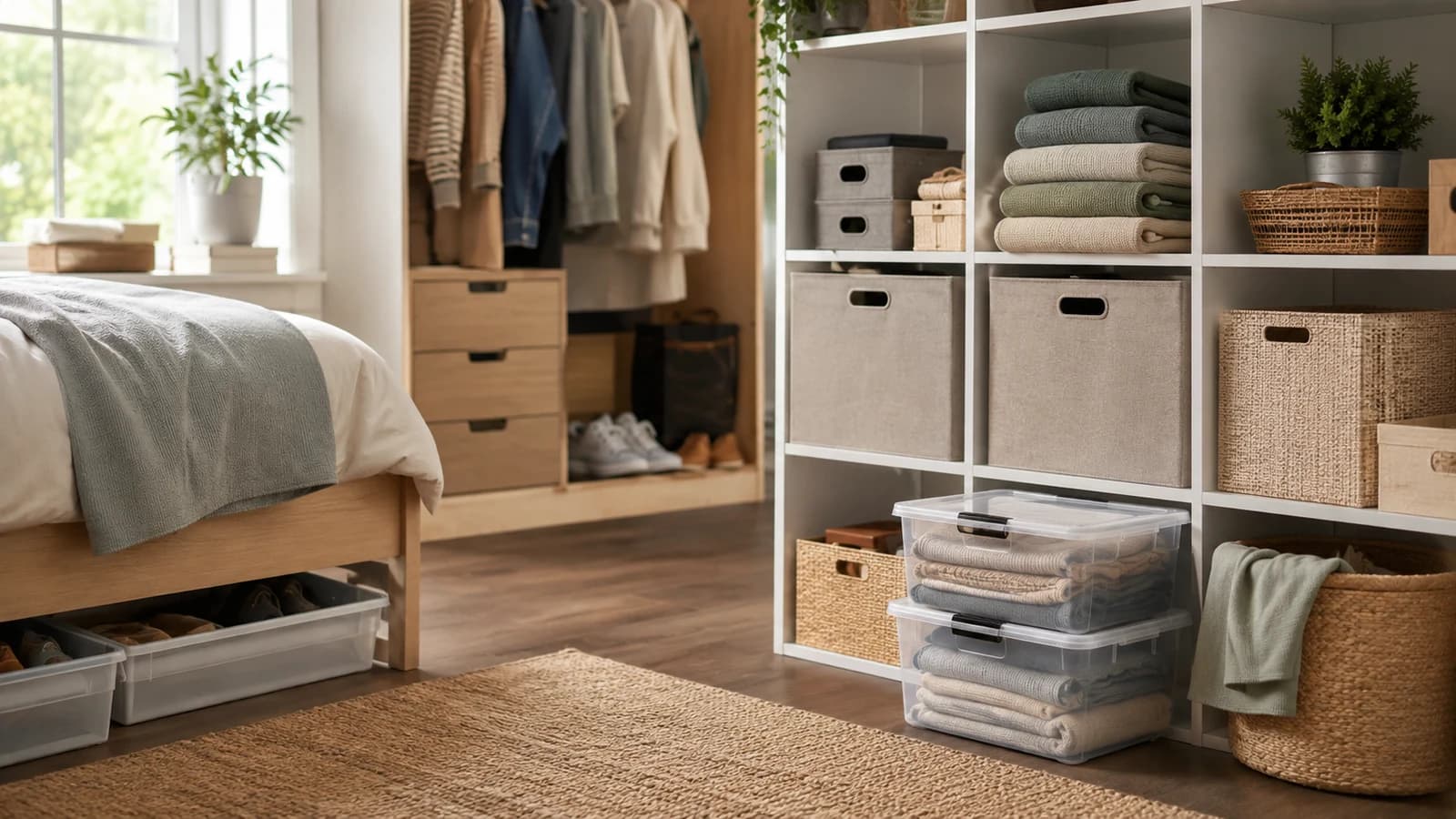
Small homes often have enough total space but not enough well-organised storage. The goal is to use awkward and vertical areas without making rooms feel crowded.
Before buying storage products, reduce what you no longer need and measure the spaces you intend to use.
Small-space storage principles
- Declutter before buying additional storage.
- Use vertical space where floor space is limited.
- Choose stackable containers for flexible organisation.
- Measure cupboards, shelves and under-bed areas first.
- Keep everyday items accessible and rarely used items further away.
Use vertical space
Tall shelving and stackable storage can make use of space that would otherwise remain empty. The aim is to increase capacity without blocking normal movement through the room.
Heavy items should normally stay lower down while lighter items can be stored higher.
Choose stackable storage
Stackable boxes can work well for clothes, shoes, toys, paperwork and household supplies. Transparent or clearly labelled containers make it easier to find items without opening every box.
Check how a container opens when stacked. Front-opening designs may be easier to use than boxes where the entire stack must be removed.
Use hidden spaces
Areas beneath beds, sofas, stairs and high shelves can provide useful storage for less frequently used items.
Avoid filling every hidden space simply because it exists. Storage works best when you still know what you own and where it is.
Organise kitchens and cupboards
Shelf risers, door-mounted storage and suitable racks can improve cupboards without increasing their footprint.
Measure height as well as width and depth before buying organisers because shelves and cabinet doors can limit usable space.
Declutter before expanding storage
Buying more boxes can hide clutter rather than solve it. Review items by category and remove things that are damaged, duplicated or no longer used.
Once you know what remains, storage products can be selected around actual needs rather than guesses.
Match storage to the items being stored
Storage works best when the container or organiser is chosen for a specific purpose. Clothing, shoes, paperwork, children's toys and kitchen supplies all have different requirements, so one type of box will not necessarily work well everywhere.
For clothing and bedding, consider breathable or enclosed storage depending on the location. For frequently used items, easy access is normally more important than completely hiding the contents.
Avoid overloading shelves, racks or storage units beyond their stated capacity. Heavy items should generally be stored lower down where they are easier and safer to retrieve.
Storage ideas for bedrooms
Bedrooms often contain valuable unused space beneath beds, above wardrobes and inside the lower sections of cupboards. Under-bed containers can work well for seasonal clothing, spare bedding and shoes that are not needed every day.
Drawer dividers and small organisers can prevent accessories from consuming an entire drawer. If wardrobes are deep, boxes or baskets can group similar items so that things at the back remain accessible.
For children's rooms, storage that is simple to open and clearly organised can make it easier for toys and belongings to be put away after use.
Review your storage system regularly
A storage system that worked six months ago may no longer suit your household. Clothes accumulate, hobbies change and children outgrow equipment, so review cupboards and storage areas periodically.
Remove unused or damaged items before purchasing more containers. If every storage box is permanently full, the problem may be the quantity of belongings rather than a lack of storage furniture.
Good organisation should make everyday life easier. If retrieving one item requires moving several heavy boxes, consider changing the layout rather than simply adding more storage.
How to choose storage products online
Dimensions are the most important specification when buying storage online. Measure the available width, height and depth and allow enough clearance for doors, drawers or lids to open properly.
Think about how frequently the contents will be used. Everyday items should be easy to reach, while seasonal clothing, decorations and spare bedding can be stored in less accessible areas such as beneath beds or on higher shelves.
Also consider the weight of what you plan to store. Lightweight organisers designed for clothing may not be appropriate for tools, books or other heavy household items. Always check stated load limits where they are provided.
Small-home storage checklist
- Declutter first
- Measure storage spaces
- Use vertical shelving
- Consider stackable containers
- Label closed boxes
- Use under-bed space
- Keep frequently used items accessible
- Review storage every few months
Frequently asked questions
How do I create more storage in a small home?
Use vertical and hidden spaces, choose stackable storage and remove items you no longer need before adding more containers.
Are clear storage boxes better?
They can make contents easier to identify, although labelled opaque boxes can work equally well where appearance matters.
Should I buy storage before decluttering?
Usually no. Decluttering first gives you a better idea of how much storage you actually require.
Continue with JASOTO
Compare your next step
Discover UK businesses, compare services and request written quotes before making a decision.