
Shopping Guides · UK Guide 2026
Kitchen Essentials Checklist UK: What Every Home Needs
Updated 23 August 2026 · 820 words
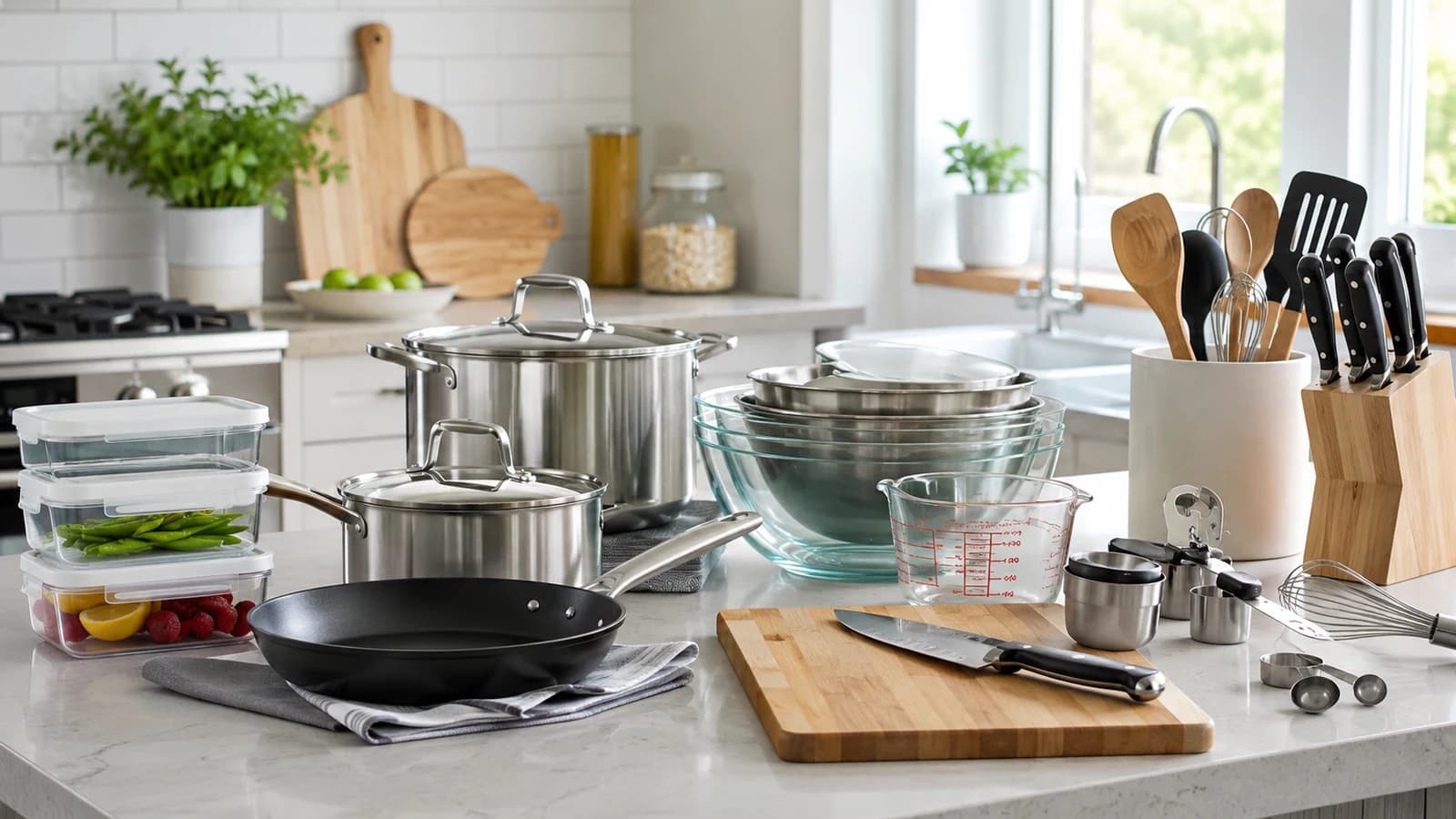
Setting up a kitchen is easier when you focus on items you will use regularly rather than filling cupboards with specialised gadgets.
A practical kitchen needs reliable preparation tools, cookware, storage and cleaning equipment. You can then add specialist items as your cooking habits develop.
Core kitchen essentials
- Start with basic cookware and preparation tools.
- Choose utensils that suit the surfaces and pans you use.
- Use storage to keep frequently used items accessible.
- Avoid buying specialist gadgets until you know you need them.
- Measure shelves and cupboards before buying storage equipment.
Food preparation essentials
A good chopping board, dependable knives and several basic preparation tools cover a large percentage of everyday cooking tasks.
Choose equipment that is easy to clean and suitable for the foods you prepare regularly.
- Chopping boards
- Kitchen knives
- Peeler
- Grater
- Mixing bowls
- Measuring jug and spoons
Cookware
Most homes do not need a huge cookware set. A few useful saucepan sizes, a frying pan and an oven tray can cover many meals.
Check whether cookware is compatible with your hob, particularly if you use induction.
Kitchen utensils
A spatula, wooden or silicone spoon, tongs and ladle are useful starting points. Consider the material of the utensil so it does not damage non-stick cookware.
Store frequently used utensils where they are easy to reach without overcrowding the worktop.
Storage and organisation
Good organisation can make a small kitchen significantly easier to use. Shelf racks, drawer organisers and stackable storage can increase usable space.
Measure available space before ordering racks or organisers because product dimensions can vary considerably.
What you can buy later
Specialist appliances and single-purpose gadgets can be useful, but they also consume cupboard and worktop space. Add them when you know they will be used regularly.
For a first kitchen, prioritising versatile equipment normally produces better value.
Choose kitchen equipment for how you actually cook
The most useful kitchen is not necessarily the one with the most equipment. Think about the meals you prepare regularly and choose tools that make those tasks easier. Someone who cooks from scratch every day may need different equipment from someone who mainly prepares quick meals.
Versatile products normally earn their cupboard space more easily. A good mixing bowl can be used for baking, preparation and serving, while a quality frying pan may be used almost every day.
Before buying electrical appliances, consider how frequently they will be used and where they will be stored. Large appliances that permanently occupy worktop space can make a small kitchen harder to use.
Food storage and reducing waste
Reusable containers help organise cupboards and refrigerators while making leftovers easier to store safely. Choose sizes that match the portions and ingredients you normally use rather than purchasing large sets containing many unnecessary shapes.
Transparent containers can make it easier to see food before it is forgotten, while labels are useful for dried ingredients and frozen meals. Check whether containers are suitable for the freezer, microwave or dishwasher if you intend to use them that way.
Organisation can also reduce duplicate purchases because you can see what ingredients are already available before shopping.
Cleaning and maintaining kitchen equipment
Follow care instructions for pans, knives, chopping boards and electrical appliances. Some non-stick surfaces can be damaged by abrasive cleaning products or metal utensils, while good knives can lose their edge more quickly if they are stored loosely in a drawer.
Clean equipment promptly after use and replace badly damaged items where continued use could create a hygiene or safety concern.
How to avoid wasting money on kitchen gadgets
Kitchen products are often marketed as time-saving essentials, but many single-purpose gadgets end up unused. Before buying something new, think about whether an existing knife, pan, bowl or utensil can already perform the same task.
Compare dimensions carefully as well. Large appliances and organisers can take up more cupboard or worktop space than expected, particularly in smaller UK kitchens. Checking measurements before ordering can prevent an item becoming another storage problem.
Prioritise products that solve a problem you regularly experience. If an accessory will be used several times each week, it is much more likely to provide good value than something purchased for a task completed once or twice a year.
Kitchen essentials checklist
- Chopping boards
- Knives
- Saucepans
- Frying pan
- Oven tray
- Spatula and cooking spoon
- Tongs
- Mixing bowls
- Measuring equipment
- Food storage containers
- Kitchen cleaning essentials
Frequently asked questions
What kitchen items should I buy first?
Start with food preparation tools, basic cookware, utensils and food storage before buying specialist appliances.
How can I organise a small kitchen?
Use vertical shelf space, drawer organisers and stackable storage while keeping frequently used items easy to access.
Do I need a complete cookware set?
No. A few well-chosen pans and trays can be more useful than a large set containing sizes you rarely use.
Continue with JASOTO
Compare your next step
Discover UK businesses, compare services and request written quotes before making a decision.