
Shopping Guides · UK Guide 2026
Fishing Equipment for Beginners UK: Starter Kit Checklist
JASOTO · Updated October 31, 2026 · 1,190 words
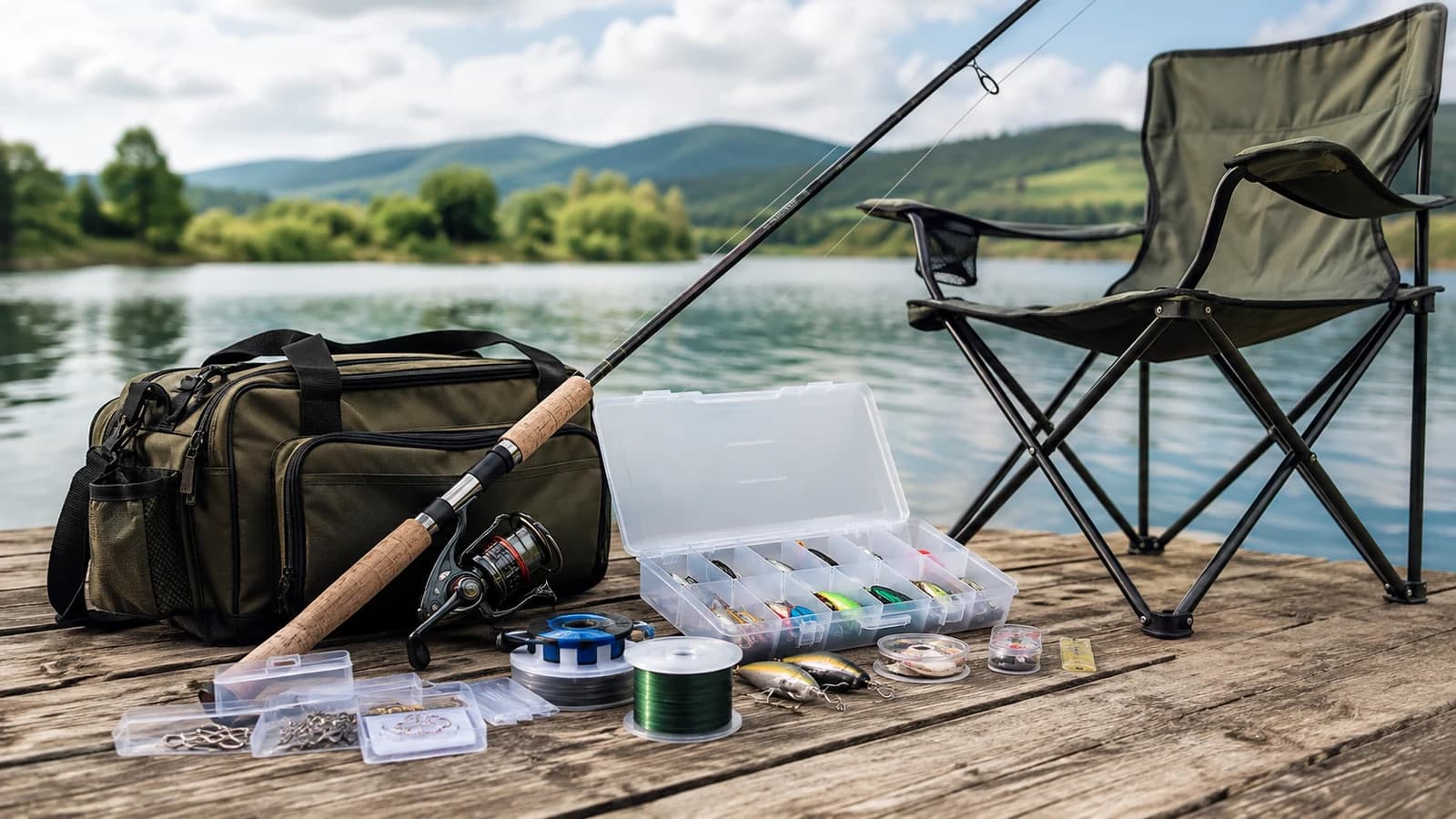
An example fishing setup with a rod, reel, tackle storage and chair. AI-generated illustration; the equipment is not a tested or recommended product set.
To start fishing with a rod and reel, you need a compatible rod, reel and line, hooks, the tackle and bait or lures for your chosen method, plus a landing net and suitable unhooking equipment. Choose one venue and fishing method first: a freshwater float-fishing kit is not a universal kit for sea, fly or predator fishing.
Use the starter checklist below to separate essential equipment from optional extras. Ask the venue or a tackle specialist to check your setup and show you safe fish handling before your first outing.
Beginner fishing kit: the essentials
- Choose a rod, reel and line that suit the venue, method and fish.
- Pack suitable hooks, floats or weights, and permitted bait or lures.
- Have a landing net and suitable unhooking equipment ready before fishing.
- Check venue permission, rules and the licence requirements for your location.
What fishing equipment do I need to start?
For a first freshwater rod-and-reel session, use this as a starting checklist, then confirm the details with your fishery or tackle shop. Some beginner methods use a whip or pole instead of a reel, so buy for the method you will actually learn.
- Rod and reel: choose a compatible combination for your intended fishing method.
- Line and hooks: match them to the rod, target fish and venue rules; carry suitable spares.
- Terminal tackle: take the floats, weights or feeders needed for that method, rather than a large mixed assortment.
- Bait or lures: check what the venue allows and how to store them.
- Fish-care equipment: a suitable landing net, disgorger or forceps, and an unhooking mat where appropriate or required.
- Small accessories: line cutters, tackle storage and a bait container, plus clothing, water and sun or rain protection.
Source: Scottish Federation for Coarse Angling: buying your first tackle. Check the source for current guidance and terms.
Which fishing accessories are essential, and what can wait?
Prioritise the items that let you assemble the rig and land and unhook fish appropriately. A landing net and unhooking tool belong in the first-trip plan, not on a later shopping list. Ask for a demonstration rather than learning fish handling for the first time after a catch.
Extra rods, large lure collections and specialist electronics can wait until your fishing method calls for them. A chair or larger bag may help with comfort, but neither replaces the tackle and fish-care equipment the session needs.
Check what a starter set actually includes
A box labelled starter kit may include a rod and reel but leave out line, landing equipment or tools. Read the item list and check the rod and reel specifications before paying.
- Is the reel supplied with line, and is that line suitable?
- Are the hooks and other tackle allowed at your venue?
- Are a landing net, handle and unhooking tool included or separate?
- Can someone demonstrate assembling the rig and using the fish-care equipment?
Start with the rod and reel
For most beginners, a simple rod-and-reel combination is easier than building a highly specialised setup. Think first about where you are likely to fish: canals, lakes, rivers and the coast can require different equipment.
A reel should feel smooth, be comfortable to hold and have enough capacity for the line you intend to use. Expensive equipment is not automatically better for someone learning the basics.
- Match the rod length and strength to your fishing style.
- Check whether the reel can be configured for your preferred hand.
- Avoid buying highly specialised equipment before you know what you enjoy.
Line, hooks and terminal tackle
Fishing line is one of the most important parts of the setup because it connects every other component. Beginners often benefit from using a straightforward line that is easy to knot and manage.
Hooks, swivels, weights and floats are inexpensive individually but quickly become difficult to manage without organisation. Buying a sensible starter selection is usually more useful than buying large quantities of one item.
- Carry spare hooks in several suitable sizes.
- Keep swivels, weights and other small tackle separated.
- Replace damaged or badly worn line rather than risking a lost fish.
Lures and bait equipment
Lures are available in an enormous range of colours, shapes and swimming actions. Beginners do not need dozens. Start with a small selection appropriate for the species and water you intend to fish.
If you use bait, think about storage, preparation and keeping the fishing area clean. A small bucket or suitable container can be more useful than another expensive lure.
Fishing storage and comfort
A tackle box, fishing bag or rod bag protects equipment and makes it much easier to find what you need. Organisation becomes increasingly important as your collection grows.
For longer sessions, a folding fishing chair, weather-appropriate clothing and somewhere to store food and water can improve the day more than buying another piece of specialist tackle.
What beginners should avoid buying immediately
It is easy to spend heavily before discovering which kind of fishing you actually enjoy. Start with the basics, fish several times and then upgrade the parts of your setup that are genuinely limiting you.
Pay particular attention to product dimensions, materials and compatibility when ordering online. A low price is not useful if the item does not work with the rest of your setup.
Check that the basic equipment works together
Choose the fishing method first, then check that rod, reel, line and tackle are compatible. Ask a specialist to explain a small starter setup rather than buying unrelated items individually. Include the equipment needed to land and handle fish appropriately for that activity.
Plan the first outing
Check the venue's rules and access, the relevant licence and permission to fish. Practise assembling the equipment and handling it safely before the trip. A clear plan for one venue helps you identify missing essentials without buying equipment for several different fishing methods at once.
First fishing trip checklist
- Choose a rod, reel and line that suit the venue, method and fish.
- Pack suitable hooks, floats or weights, and permitted bait or lures.
- Have a landing net and suitable unhooking equipment ready before fishing.
- Check venue permission, rules and the licence requirements for your location.
- Check the kit contents; a starter set may omit essential items.
- Practise setup and ask an experienced angler or coach to demonstrate fish handling.
Frequently asked questions
What fishing equipment do I need to start?
For rod-and-reel fishing, start with a compatible rod, reel and line, suitable hooks and terminal tackle, and bait or lures for your chosen method. Include a landing net and appropriate unhooking equipment. Check the venue rules, permission and relevant licence requirements before your trip.
What are must-have fishing accessories for beginners?
Alongside the rod and tackle, plan for a landing net, suitable unhooking tools, line cutters, tackle storage and a bait container. An unhooking mat may be appropriate or required. Check the fishery's equipment rules and ask someone experienced to demonstrate safe use.
How much fishing gear does a beginner need?
A beginner normally needs a basic rod and reel, line, hooks and suitable tackle rather than a large collection of specialist equipment.
Should beginners buy expensive fishing gear?
Not necessarily. Reliable, easy-to-use equipment is normally more important than premium specifications while you are learning.
Do I need a fishing licence in the UK?
Licence and permission requirements depend on where and how you fish, so check the current rules for your location and venue before fishing.
Continue with JASOTO
Compare your next step
Discover UK businesses, compare services and request written quotes before making a decision.