
Shopping Guides · UK Guide 2026
DIY Tools Every Homeowner Should Have in the UK
Updated 23 August 2026 · 820 words
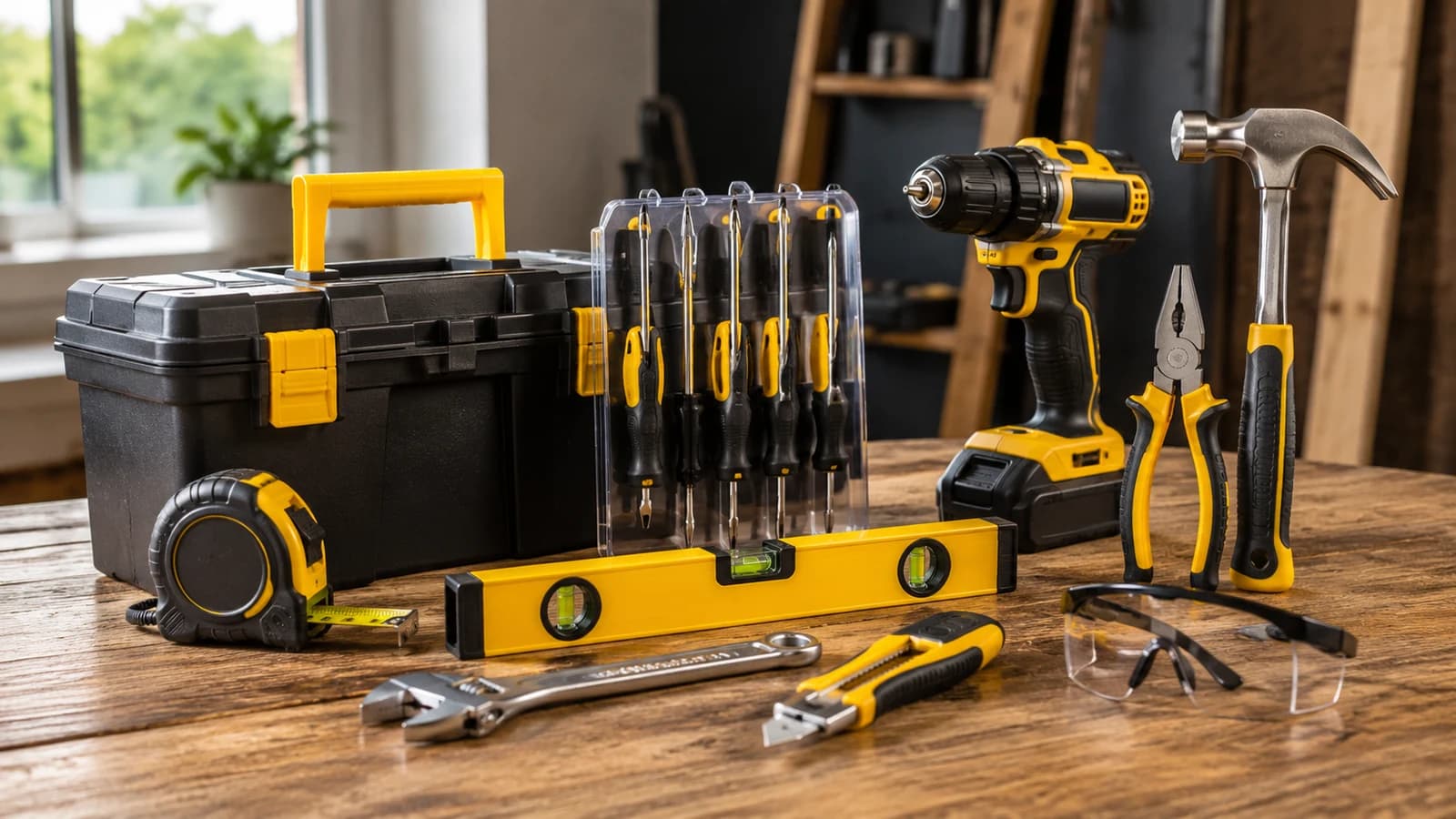
You do not need a professional workshop to handle basic jobs around the home. A compact set of reliable tools can cover tasks such as assembling furniture, tightening fittings, hanging pictures and carrying out minor repairs.
Start with versatile hand tools and add power tools only when your projects justify them.
Essential home DIY tools
- Keep a measuring tape and level for accurate positioning.
- Own several common screwdriver types and sizes.
- A hammer, adjustable spanner and pliers cover many basic jobs.
- Use the correct safety equipment for the task.
- Do not attempt electrical, gas or structural work beyond your competence.
Measuring and marking tools
Accurate measurement prevents many DIY mistakes. A tape measure, pencil and spirit level are useful for everything from shelves to furniture.
Measure twice before drilling or cutting, particularly when working around pipes, wiring or finished surfaces.
Basic hand tools
A useful starter kit normally includes flat and cross-head screwdrivers, pliers, an adjustable spanner, hammer and utility knife.
Choose tools that feel secure in the hand and are suitable for the size of fasteners you are working with.
Drilling and fixing
A drill can be useful for many household tasks, but the correct drill bit and fixing matter as much as the drill itself.
Wall construction varies, so identify the surface and check for hidden cables or pipes before drilling.
Safety equipment
Eye protection, gloves, hearing protection and suitable respiratory protection may be required depending on the job.
Read product instructions and do not treat protective equipment as optional when cutting, grinding, sanding or working with dust.
Know when to call a professional
DIY can save money on appropriate small jobs, but some work should be handled by suitably competent or qualified people.
Gas, significant electrical work, structural alterations and jobs you do not understand are areas where professional help may be the safer choice.
Choosing a useful starter tool kit
A pre-assembled household tool kit can be convenient, but check what is actually included before buying. A kit containing dozens of rarely used pieces is not necessarily better than a smaller set containing reliable screwdrivers, pliers, a hammer, measuring equipment and suitable spanners.
Quality matters most on tools that will be used frequently or placed under significant force. Comfortable handles, secure joints and correctly sized tool heads make jobs easier and reduce the chance of damaging screws or fittings.
Keep tools together in a box, case or organised storage area. Being able to find the correct tool quickly makes small maintenance jobs much less frustrating.
Useful fixings and consumables to keep at home
Basic DIY jobs often stop because the correct fixing or consumable is missing rather than because a specialist tool is required. A small organised selection of screws, wall plugs, picture hooks, cable ties, tapes and spare blades can be useful.
Do not assume that one wall plug or fixing is appropriate for every surface. Plasterboard, masonry, timber and other materials require different approaches, particularly when supporting heavier objects.
If you are uncertain what is behind a wall, investigate before drilling. Pipes and electrical cables may be hidden from view.
Tool maintenance and storage
Return tools to a dry location after use and clean away dust, moisture and other debris. Check cables, batteries and moving parts on power tools periodically and follow the manufacturer's maintenance instructions.
Proper storage protects tools from damage and also reduces the risk of children or other people accessing sharp or powered equipment.
Buying DIY tools without overspending
It is easy to spend heavily on tools when starting DIY, but most household maintenance jobs require a relatively small collection. Add equipment as projects demand it rather than buying specialist tools simply because they might be useful one day.
When comparing tools online, look beyond the number of accessories included. Check dimensions, battery specifications where relevant, compatibility with replacement parts and whether the tool is suitable for the material you intend to work with.
For occasional jobs, borrowing or hiring specialist equipment can sometimes make more sense than buying it. Spend your own budget on the dependable tools you expect to use repeatedly.
Basic home tool kit
- Tape measure
- Spirit level
- Screwdriver set
- Hammer
- Pliers
- Adjustable spanner
- Utility knife
- Suitable drill and bits where needed
- Safety glasses
- Work gloves
- Tool box or storage case
Frequently asked questions
What is the most useful DIY tool to own?
There is no single tool for every job, but a tape measure, screwdriver set, hammer and pliers form a useful basic kit.
Should every homeowner own a drill?
A drill is useful for many tasks but is not essential for every person. Buy one when the jobs you intend to tackle require it.
What DIY jobs should I avoid?
Avoid work that requires qualifications, specialist knowledge or presents serious electrical, gas, structural or other safety risks.
Continue with JASOTO
Compare your next step
Discover UK businesses, compare services and request written quotes before making a decision.